
By Jake Pryor and Zoe Raptis
The ICC is effective because it creates an international standard for trials regardless of the parties or nature of the conflict. Imagine every leader being tried by different courts created by the victors in any given war. There would be no standards for how to put leaders on trial, leading to, at best, different standards for justice and, at worst, letting leaders get away with crimes in the absence of international laws to hold them accountable.
Zoe: I would question the assertion that the ICC creates a constant standard of international justice. From the start the ICC’s international scope was significantly in doubt. When the Rome Statute was voted upon only 120 states voted in favor. China, Russia, and the US do not accept the ICC’s jurisdiction over their internal sovereign affairs. Overall, 70% of the world’s population is outside the jurisdiction of the court. How can the ICC be effective if the 3 most powerful members of the United Nations Security Council do not even accept its jurisdiction?
Jake: Your point serves to prove that the structure is not the issue with the ICC but rather a lack of scope. While not having jurisdiction over a large amount of the population hurts the ICC, it has nevertheless successfully prosecuted three world leaders. It is also no surprise that two of the three most powerful members of the UNSC have citizens under current investigation, including Putin himself, and a handful of American service members. It also does not matter the amount of states joining if the statue lacks actual power. Often states who knowingly violate international law will actively sign on to follow these laws because they are weak. If the ICC was weak and ineffective why are we not seeing the same effect?
Zoe: On the contrary, the structure of the ICC is a problem that disincentivizes global leaders from signing on. States are not willing to relinquish their sovereignty. The international community has no mandate to intervene within states. The fact that major players such as the US, India, and China have not signed on undermines any attempts to legitimize international law. The ICC cannot really do anything about Putin; it can only point fingers. Thus, the ICC lacks legitimacy and hurts rather than helps the progression of international law. You also mention its success in prosecuting 3 leaders. The only people to have been indicted by the court are Africans, implying an inbuilt bias against Africa. No matter if this institutional bias is true or not it further undermines the ICC if international organizations such as the African Union has urged members not to cooperate with the ICC.
Jake: Regarding bias against Africa, The ICC’s former president was from Nigeria and the current second vice-president is from the Republic of the Congo.What’s more, the ICC is trying to put Putin on trial and has investigated the United States, United Kingdom, Russia, Israel and Venezuela. While some states are not willing to relinquish sovereignty, 120 nations signed on to the Rome Charter, as you mentioned, displaying that a majority of states believe the ICC should be put above state sovereignty and it is up to each one to determine whether or not it is worth it.
Zoe: The crux of the debate is if the ICC is effective. So far you have proven that it has the potential to be effective, but is currently not as effective as it should be. You mention the ICC is trying to put Putin on trial, but analyzing sheer efficacy, the only successful convictions have resulted in a rift with the African Union that will take careful negotiation and adaptation of policy to bridge. Yes, 120 institutions have signed onto the Rome Statute but that is not enough to constitute an international scope. The ICC is ornamental, not effective, when looking at the results.
Jake Pryor and Zoe Raptis are sophomores at Tufts University. Jake studies Political Science, while Zoe studies Political Science and Philosophy.
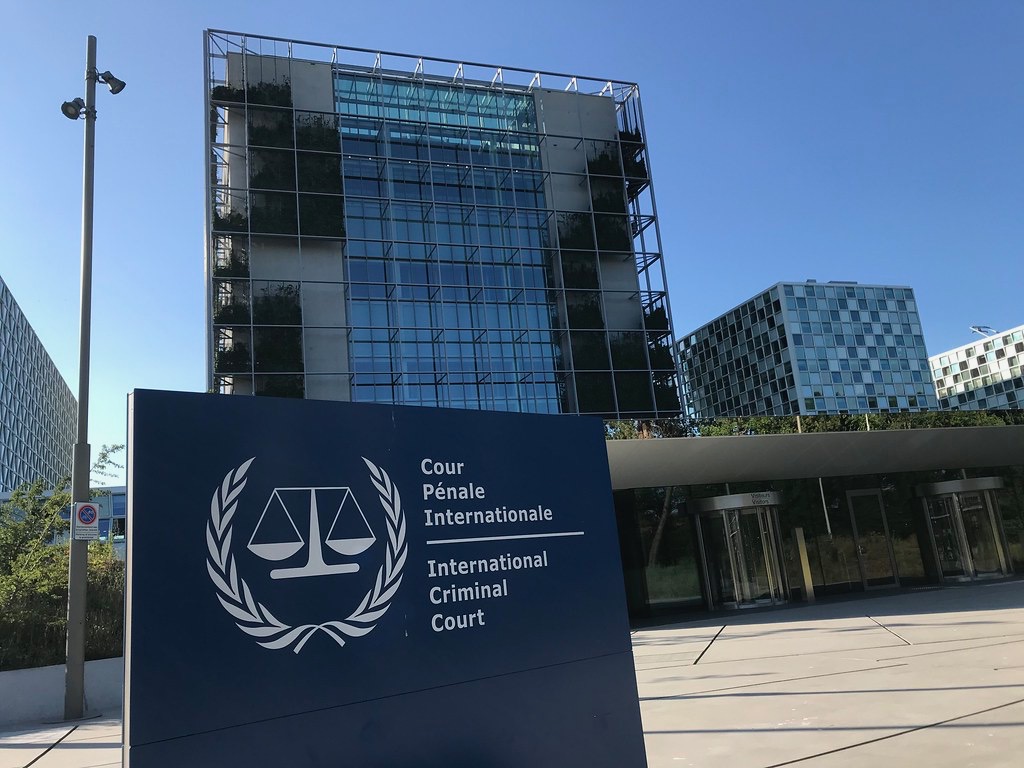
Image: The International Criminal Court (ICC) in The Hague, Netherlands
Image courtesy: Greger Ravik on Flickr
This piece is a reproduction from its original issue in Hemispheres vol. 47, no. 1.
 Hemispheres