

By Arman Kassam
When the US entered Afghanistan on October 7th, 2001, they did so with a goal in mind: regime change. More specifically, they forced a democratic government onto a country that had never truly had one. For a variety of reasons, from local corruption to the Taliban threat to public resistance, the experiment failed. But what cannot be understated is the US government’s demonstrated lack of cultural understanding – no one stopped to ask the people of Afghanistan what they wanted, to accommodate cultural schisms, to learn the history of the region, or to deal with the root causes of their unrest.
Afghanistan was cited by many to discredit the democratic experiment. Many claim that democracy cannot be the answer for countries straddled with violent histories or ethnic conflicts. However, a close examination of history reveals varying examples of societies similar to Afghanistan that worked through their difficulties and constructed a healthy, effective democracy.
Canada is one such nation. First colonized by the French, then the English, Canada has been divided since the beginning. In the years leading up to Canada’s independence in 1867, Anglophone Upper Canada and Francophone Lower Canada struggled to unify as one country. Parliament was a violent and spiteful affair; while both the French and English sides had progressives willing to reach across the aisle, each side had just as many unwavering fundamentalists. To compromise, the government finally agreed to place the nation’s capital in Ottawa, a small bilingual town between the two regions. Due to Canada’s diverse politics, a variety of parties ran in the country’s first election, including the Liberals, the Conservatives, the Liberal Conservatives, and the Anti-Confederationists. Even today, most Canadian federal debates feature four parties or more. The democratic structure of Canada reflects that of its forefathers in France and the United Kingdom, but also adapted to its own intercultural difficulties.
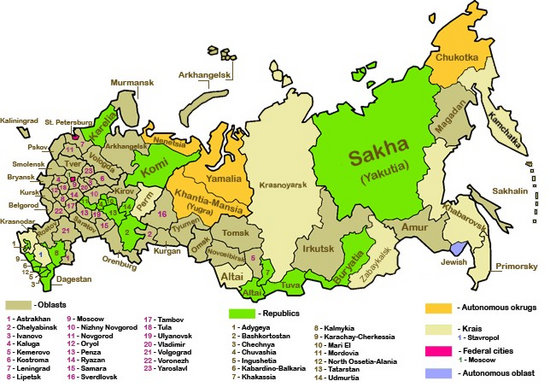
Unlike Canada, not all countries are predisposed to democracy — some take it on, or at least attempt to, by choice. Russia today is ruled by Putin’s iron fist, operating under authoritarian rule. While it maintains a superficial facade of democracy, genuine democratic principles are largely absent. For example, while Russia’s oblast system appears to grant regional autonomy to states, in reality, they are ultimately dominated by the central Russian government and are stripped of any ability to self-govern year after year. Russia has been historically ruled by authoritarian leaders to maintain cohesion over its large area. Expansion of political and economic liberties have often allowed for increased popular mobilization and eventually revolution, as seen by Tsar Nicholas’ reforms in the early 1900s and Secretary-General Gorbachev’s perestroika and glasnost policies in the early 90s. The current regime, although authoritarian, is a reflection of a de-autocratization that followed after the fall of the Soviet Union, as electoral democracy was attempted. However, a transition to democracy does not only depend on the existence of elections, but “requires fundamental, systemic changes in a given polity. Most authoritarian breakdowns do not bring about democratization but lead instead to a new authoritarian regime or state collapse and anarchy.” In Russia’s case, this is exemplified by Putin’s invasion of Ukraine, as well as his continuous crack down on protests and dissent. This pattern of centralized authority has existed in Russia for centuries – therefore, it is pertinent to understand that not only elections, but democratic principles of freedom and equality must be enshrined if democracy is to ever flourish in Russia.
But what about nations that had democracy forced onto them? As a result of colonialism, countries across South America, Africa, and Asia were stuffed into a democratic box modeled on that of their colonizers. Nigeria, for example, was given a parliamentary system by the British. However, Nigeria’s borders were not drawn based on what made the most sense for the region, rather, they were the result of conquest and negotiations with other colonial powers like Germany and France. This dissonance created a country with a stark divide: the richer Christian tribes like the Yoruba and the Igbo in the South and the poorer and rural Muslim tribes, like the Hausa-Fulani, in the North. Decades of upheaval and military coups eventually led to the modern form of Nigeria as a republic. The current government delegates much more power to states, allowing for a more decentralized structure to fit the cultural diversity of the nation. For example, many areas of the north use Shari’a law for local disputes instead of federal Nigerian law so that they can be tried according to their community’s beliefs. Nigeria also shifted their capital north from the port city of Lagos to Abuja, located in the diverse “Middle Belt” near the center of the nation. This move helped the Hausa Fulani feel less removed from the workings of the nation and has started to stabilize Nigeria by increasing trust in the government.
This article is not an argument for every country to be democratic, nor is it meant to say that these three countries are perfect. Rather, it is to demonstrate that democracy can work in all types of countries, so long as the structure of the government properly reflects the culture and the history of said country. America could have considered their historical impact on Afghani politics such as the funding of the Mujahideen, and made more efforts to reconcile their mistakes. They could have taken note of the fact that Afghanistan was previously only a democracy for a short period, one dotted by Russian and American intervention, and as such, may be distrustful of or unfamiliar with the healthy practice of democracy. Or perhaps they could have realized that a country scarred by corruption requires robust accountability mechanisms so that the nation doesn’t crumble immediately after America’s departure. If America had stopped to consider these factors, perhaps Afghanistan would be a thriving society today instead of mourning 172,000 lives and right back to where it was on October 6th, 2001.
This piece is a reproduction from its original issue in Hemispheres Volume 48 Issue 1. Read more here.
 Hemispheres