
The Crisis of Sacrifice Zones and International Chemical Dumping
By Christina Bellin

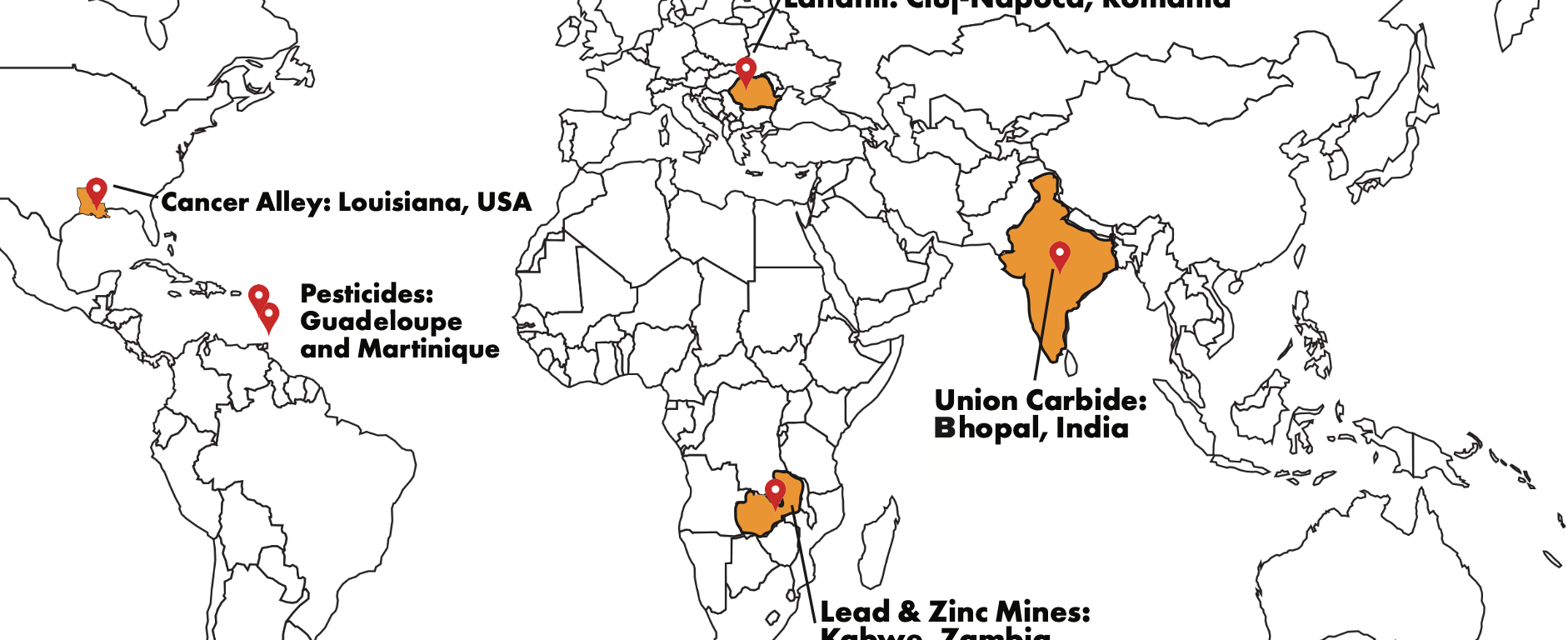
December 3, 1984: the methyl isocyanate tank in the Union Carbide plant in Bhopal, India exploded, leaking 40 tons of toxic gas into the air and ground around the plant. Nearly four thousand people died that night and more than 20,000 died the following decade due to gas-related illnesses. This December marks the 40th anniversary of the Bhopal disaster, and little has changed in terms of chemical dumping.
For context, Union Carbide was a pesticide manufacturing company based in the US. The company had two major plants: one in Bhopal and one in West Virginia. In July 1984, the Bhopal plant was to be shut down and sold, but because a buyer could not be found, the factory continued running. To save money on manufacturing operations, safety regulations involving the cooling of the gas tanks were ignored. Additionally, the tanks themselves were much larger than the ones found at the sister plant in West Virginia, which followed safety precautions. Though the factory was shut down after the explosion, the chemical waste left behind has never been fully cleaned up, leaving the groundwater contaminated to this day.
Those who survive continue to say that the lucky ones are those who died the night of the disaster. Non-governmental organizations (NGOs) from around the world rushed to Bhopal in an attempt to save the people who were suffering from the leakage. Clinics were set up, and antidotes to the gas were distributed. However, Union Carbide maintained that the gas from the factory was non-toxic, and the harm done was “temporary,” therefore no antidote was needed. The company shut down the clinics and refused to provide aid to the people of Bhopal. The water is still contaminated, and so is the blood of the individuals drinking it. Children are born missing limbs and with disabilities because of the poison in their mother’s wombs. Thousands have succumbed to cancers caused by the poison. Meanwhile, Union Carbide still refuses to take responsibility.
At the time of the disaster, there were no international laws regarding chemical dumping. The Basel Convention on the Transboundary Movement of Hazardous Wastes, enacted in 1988, lays out the only current international law on chemical dumping, intending to control the movement of hazardous waste across borders. According to the convention, trade in hazardous waste cannot take place “without the importing country’s written consent” or if the exporting country believes that the waste will not properly be handled within the country. One major restriction outlined in the Basel convention is that waste can only be exported if the exporting country does not have the ability to dispose of or recycle the waste properly or if the importing country is using the wastes as raw materials. This restricts the movement of waste between countries and prevents the dumping of one country’s waste into another.
Despite the Basel Convention, chemical waste continues to be dumped around the world. These areas are referred to as “sacrifice zones,” areas where chemical waste is dumped or where the land has been exploited in a way that the environment has been harshly affected, including sites like oil mines or large agricultural parcels. Oftentimes, these areas are poor and populated by marginalized groups. Even with chemical dumping laws, many countries find loopholes and continue to dump their waste, or exploit the land, often at great expense to the people living in these communities. The following are just a few examples of modern-day sacrifice zones.
Kabwe, Zambia
Kabwe is one of the most polluted cities in Africa because of nearby lead and zinc mines. Dust from the now-closed mines blows into the villages, contaminating the air and groundwater. While the Zambian government has attempted to provide some medical care, especially to those living on the contaminated canal, if the toxic waste from the mines is not cleaned up, the situation will continue to worsen. Currently, 95 percent of children are reported to have high levels of lead in their blood, and this will only increase if the situation is not rectified. The companies that own the mines continue to refuse to take responsibility and pay for the cleanup of the toxic chemicals.
Guadeloupe and Martinique
Ninety percent of the people living in Guadeloupe and Martinique have chlordecone, a carcinogen used in pesticides, in their bloodstream. This is because of the excessive use of pesticides, especially in the banana cultivation regions, currently leaving 20-40 percent of agricultural land contaminated. Due to contaminated water, the government has instituted a restriction on agriculture and fishing. France is facing an international rights complaint, filed in the spring of 2024 from three NGOs within the countries, compelling the government to deal with their mismanagement of water and the broader water crisis in these countries.
Cluj-Napoca, Romania
Cluj-Napoca, a major city in Romania, is home to Pata Rat, the country’s largest landfill. Pollution leaks from the site into the groundwater, poisoning the water supply for the city. Along with this, garbage fires from the site are killing people living in wooden shacks nearby. The landfill was not built according to EU standards and the country and city are doing little to fix the environmental and public health issues.
Cancer Alley, Louisiana
Cancer Alley is located between New Oreleans and Baton Rouge along the Mississippi River. A stretch of just 85 miles houses residential communities situated next to 200 petrochemical and fossil fuel companies. These plants dump chemicals into the water and funnel noxious fumes into the air. Cancer Alley was given its nickname because of the disproportionate number of people suffering from cancer, infertility, miscarriages, and respiratory ailments, caused by the consumption of these toxic wastes. Cancer alley is composed of predominantly minority and poor communities, so companies believe they can take advantage by dumping their waste without repercussions. Many people within the community are dependent on the plants for work, so they are compelled to accept being poisoned in exchange.
Forty years ago the disaster of Bhopal was a rude awakening to the international community about the dangers of chemical dumping. Yet, despite international efforts to regulate this, sacrifice zones continue to exist today. International companies are unwilling to take responsibility for the damage caused because of the financial impact. In the same vein, they will continue to dump toxic chemicals because it is cheaper than properly disposing of them. It is imperative that the international community finds a way to eliminate the loopholes and end this pollution, for the sake of the environment and the people that continue to suffer.
This piece is a reproduction from its original issue in Hemispheres Volume 48 Issue 1. Read more here.
Art created by Alexander Xia specially for Hemispheres.
 Hemispheres