Can Land Influence Political Culture?
By Derin İçinsel
In the international sphere where an infinite number of variables determine states’ politics, one fact remains permanent: geography. States are bounded by the geographies they inhabit, not just in terms of geopolitics and their proximity to other crucial actors, but also their topography, access to important natural resources, and their climates. Although foreign policy objectives and domestic political culture are generally credited to other factors, geography can be essential in explaining the foundational reasons for how societies interact with their governments and the external world. In demonstrating this reality, the Middle East serves as an ideal example as political cultures seem to be similar across the region, but diverge in important ways that can be explained through their geographies.
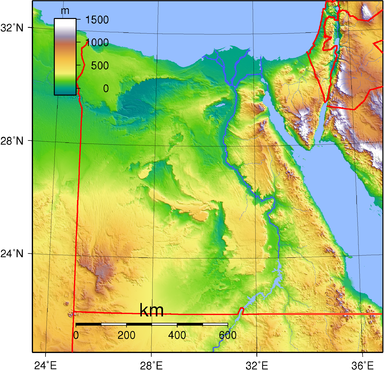
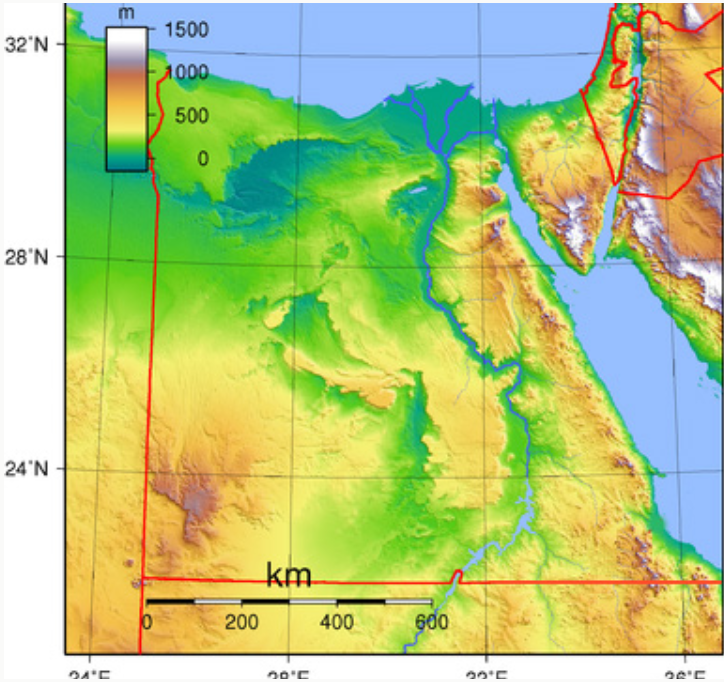
One approach to examining geography through the lens of political culture is through topography. A stark contrast appears upon comparing the topographic maps of Egypt, Iraq and Lebanon, for example, affecting their distinct political cultures. Egypt has a relatively stable, low-elevation terrain (Figure 1) that has historically facilitated the centralization of authority and physical control of communication and transportation while also leading to a highly concentrated population. The population density map of Egypt (Figure 4) exhibits the incredibly compact population centered around the River Nile, due to the presence of more fertile land around the river resulting from flooding, tourism, and agriculture-related activity. This geographical reality makes it practical for the government to surveil opposition political activity and impose regulations, while the population becomes homogeneous over time with ethnic and dialectal differences more and more blurred.
(Source: Wikimedia Commons)

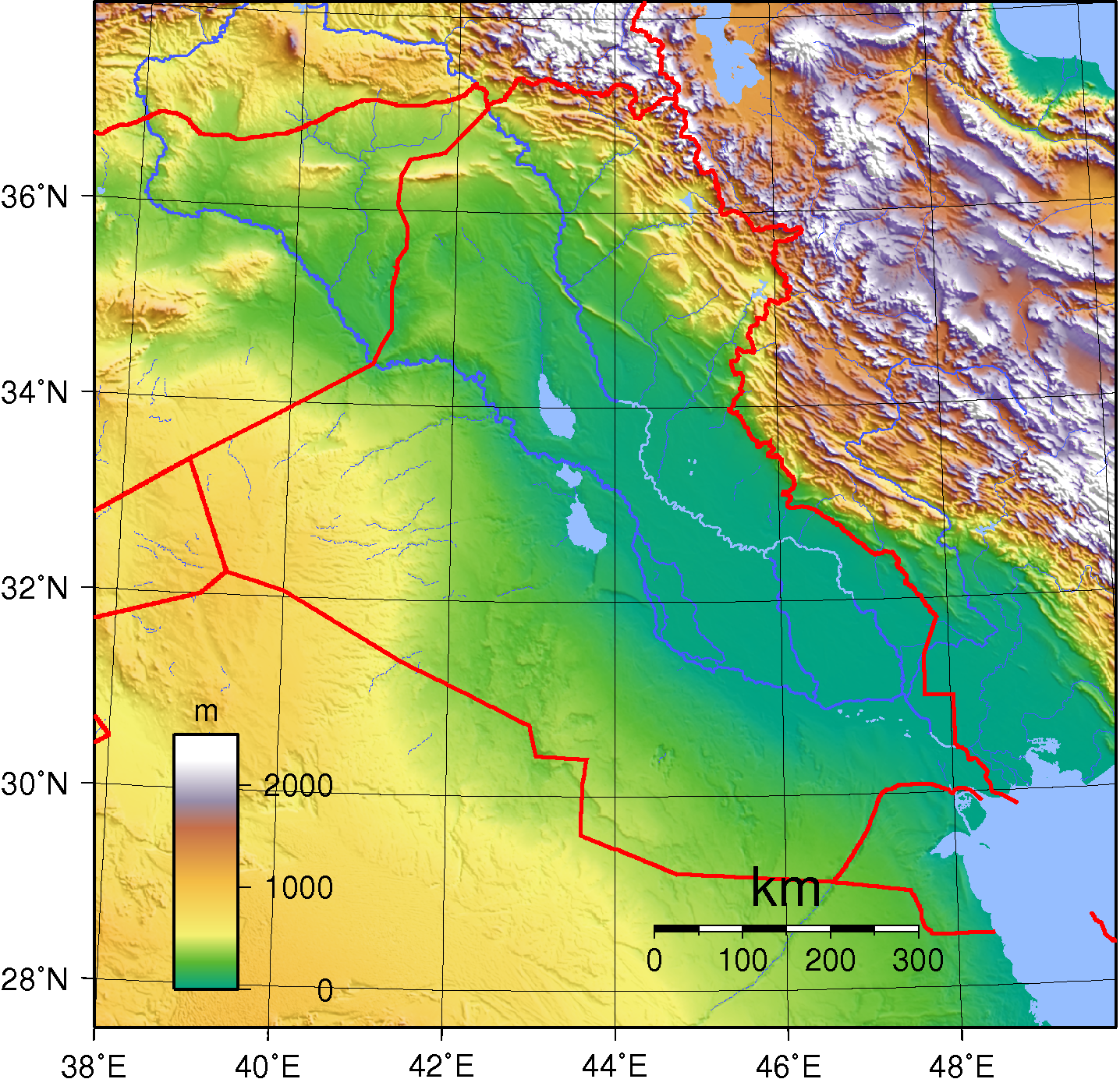
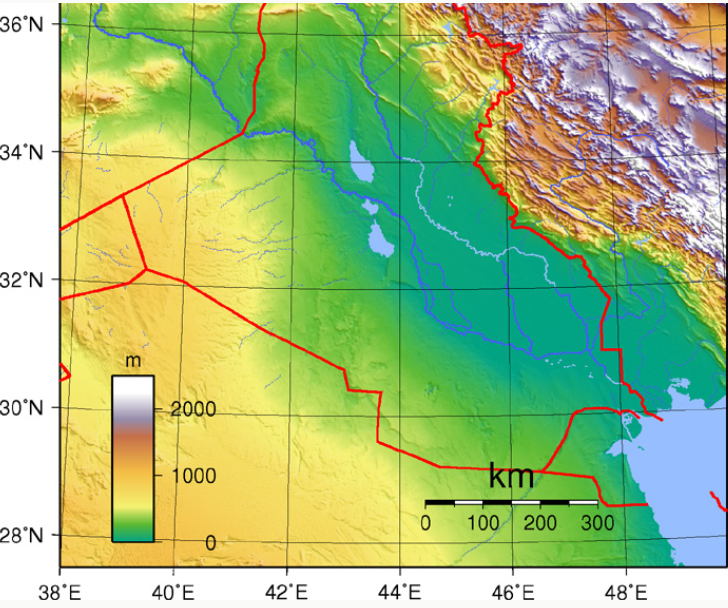
Contrary to Egypt’s particularly centralising situation, the geographical realities of Iraq and Lebanon pose significant challenges to their governments. Terrorist groups such as ISIS exemplify these problems, relying on underground tunnels or rocky caves in Northern Iraq to establish bases (Figure 3). Similarly, Lebanon is characterized by mountain ranges that have historically divided the populations into a variety of ethnic groups, instead of a largely homogenous, centralized community (Figure 4). While the presence of the Nile River in Egypt has led to greater centralization, promoting homogeneity and tolerance within the country, the existence of more topographical barriers in Iraq and Lebanon has led to a greater frequency of insurgent practices away from governmental authority and a more resistant political culture.

(Source: WikiMedia Commons)
Another, more well-studied geographical factor and its effect on political culture is the presence of oil resources, prevalent especially in the Middle East since 1/3rds of the world’s oil resources are found in the region. Whether a country has large oil reserves or not determines the kind of domestic and foreign policy they follow, with the rentier effect, when a country’s primary income is through foreign payment for unproductive goods, being very much a determinant of human rights and political culture. The United Arab Emirates is an interesting state to examine in this regard as they store six percent of the world’s oil resources, and they gained a revenue of approximately $119 billion in net oil export revenue in 2022 alone. The UAE’s immense wealth from oil enabled it to forgo direct taxes, allowing the creation of a non-representative governing structure, based on the power of monarchs rather than the people. Combined with the fact that more than 85 percent of its population are non-nationals, the absence of taxes decreases the UAE government’s incentive to consider the interests of its residents. The result of this is a politically ineffective society with high rates of human rights abuses towards its immigrant workers.
Although there are many complex, interrelated processes that create a political culture, geography, an invariable factor, can explain many of the essential dynamics within states. The Middle East is an exemplary microcosm of how geographic features encourage a state to develop in a specific direction and follow certain policies, and an analysis of any country from the geographical perspective might provide distinct insights that are generally not found through a conventional form of political research.
 Hemispheres