
By Leah Glaspey
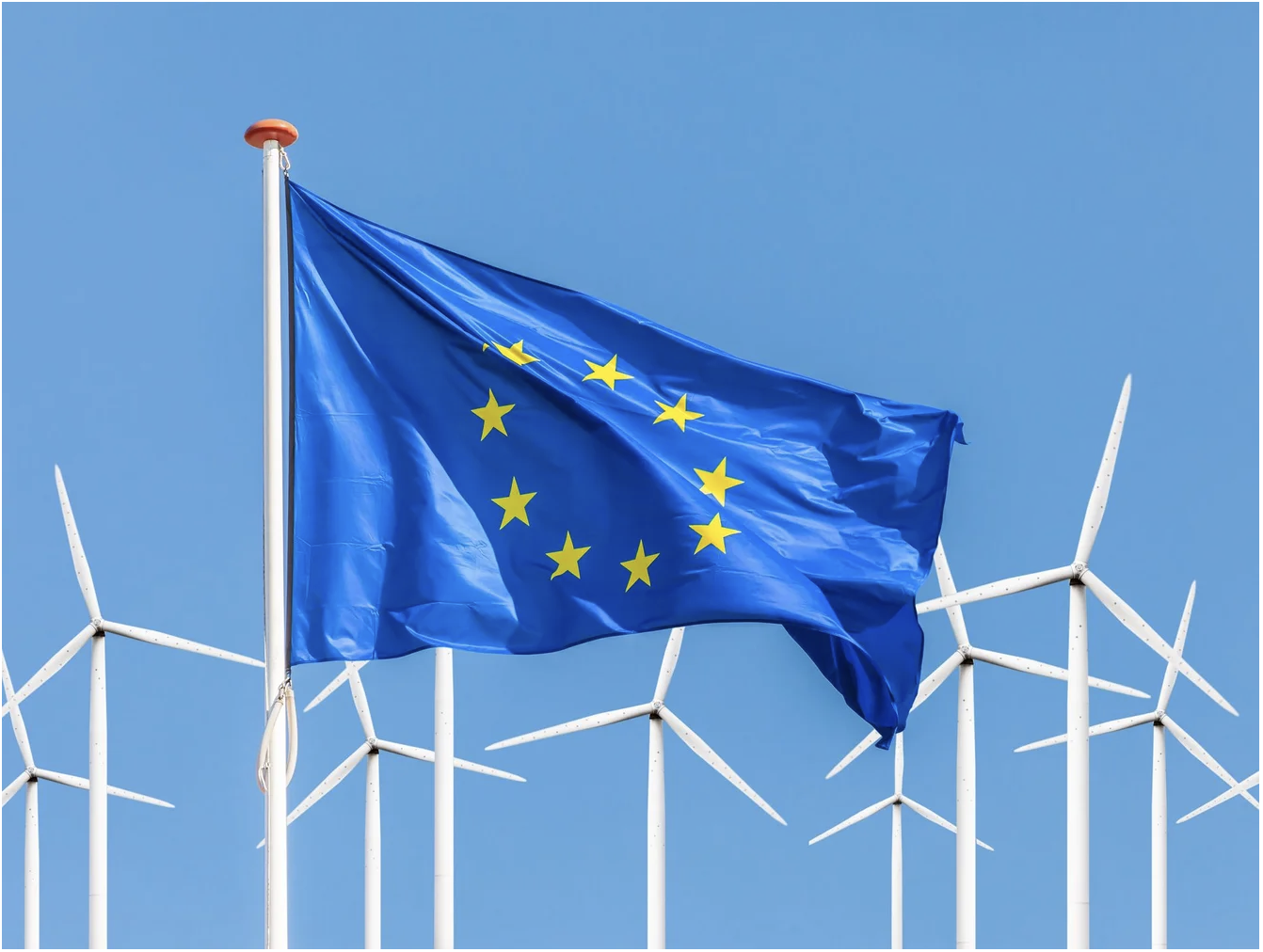
Following Russia’s invasion of Ukraine in 2022, the European Union (EU) responded with a comprehensive sanctions package on Russian goods. In return, Russia restricted gas flow into Europe to 20 percent capacity. Left with no other viable source for oil, Europe plunged into an energy crisis and intensified its focus on developing clean energy infrastructure. Independence from Russian oil meant the EU was able to act in the best interest of the region, rather than pandering to the powerhouse state built on large oil reserves. The European Winter Energy Crisis of 2023 demonstrated how investment in renewable energy is a vital national security strategy, both in limiting the impacts of climate change and building independent energy infrastructure that mitigates conflict over energy security.
In the post-industrial world, adequate energy infrastructure underpins nearly all vital systems. Energy security is fundamental for health, labor, and government infrastructure, along with many basic necessities like heating homes and cooking food. Oil reserves have historically been a vital leverage point in the international arena because adequate energy access is so fundamental to the well-being of a population. Until 2022, diplomacy between Russia and the rest of continental Europe was heavily colored by energy relations. Russia’s invasion of Ukraine made clear to continental Europe that defending its sovereignty required reduced reliance on Russian reserves. This could be done feasibly through investment in renewables.
Europe’s efficient energy transition owes in part to the EU’s commitment to carbon neutrality by 2050 and a 55% GHG emissions reduction by 2030. The institutional prioritization of clean energy meant that further investment for a quicker timeline was not difficult to achieve. Additionally, the skyrocketing cost of liquid gas made the price of an energy transition less daunting for individual consumers because the status quo was already so expensive. In this case, the EU was primed for a quick energy transition, although the winter of 2023 did include harsh struggles for families caught in the crosshairs of change. Regardless, the EU has been able to cut Russian oil from 27% of imports in 2022 to 3% in 2025, securing a much higher degree of energy sovereignty than three years ago.
A potential drawback to the development of independent energy infrastructure is the elimination of complex interdependence surrounding such a vital resource. Regional hegemons have historically been decided by access to gas and oil reserves, but the capacities of renewable energy sources have the potential to change this. While it may seem beneficial for states to shape foreign policy independently of oil-rich actors like Russia, liberal theory suggests that global peace relies on economic interdependence; without the leverage of energy dependence, the risk of conflict with such states increases. This stance, however, ignores the wealth and military might of oil-rich states. War with Russia has been prevented not only by oil dependence, but more importantly by the state’s second place ranking on the Global FirePower Index and status as a nuclear power. Even without energy interdependence, the international order has the strength to remain stable.
 Hemispheres