
By Anna Bader
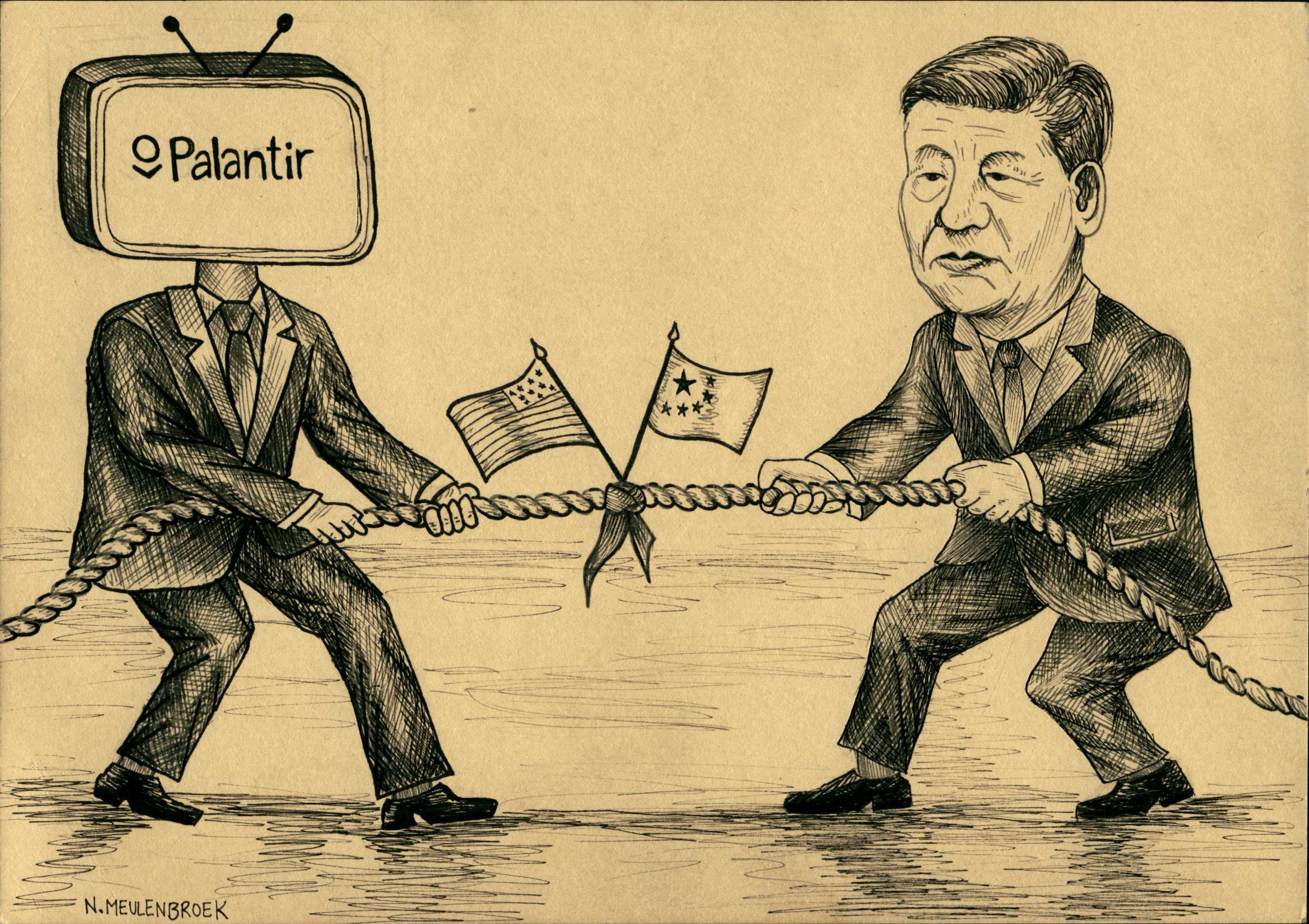
For the greater part of China’s rise as a global superpower, U.S. domestic policy makers have agonized over Chinese access to Americans’ information. The real question, however, is what information Silicon Valley has willingly given away. From the newest NVIDIA AI chip to IBM’s I2 surveillance and analysis software, it’s clear that Capitol Hill is underestimating the extent of these conspiracies. The closer the Chinese internet surveillance system is analyzed, the more it begins to resemble that of the U.S. This technology sharing has led to human rights violations against Chinese citizens, which demonstrates a security threat to the U.S; there are less limits to the aggressions China can mount against a foreign populus, especially that of an adversary.
A deeper analysis of China and the U.S.’s technology sharing demonstrates how intertwined the two systems are. DNA identification technology given to China by American company Thermo Fisher has “empowered the Chinese government to maintain a vice-like grip on a complex society.” Thus, America can be held partially accountable for enabling the widespread internet surveillance of Chinese citizens. Furthermore, blueprints revealed that IBM worked directly with Chinese defense contractors to create China’s surveillance system, the “Golden Shield.” China is even aware of the United States’ role in their ascension as a tech superpower, as China Daily concedes that Inspur (the company behind China’s surveillance machine) is the main client for the AI chips of Intel, Nvidia and AMD. In fact, American surveillance technologies were used in “a brutal mass detention campaign in the far west region of Xinjiang,” that forced the assimilation of the Uyghur people, highlighting the US’s involvement in Chinese human rights aggressions.
China’s human rights violations highlight the risks to American security under autocratic powers. The atrocities committed against the Uyghurs and other ethnic minority groups are a microcosm of a greater issue: U.S. technology in the hands of an autocracy such as the CCP has no moral limits. If China is willing to make such moves against its own population, what lengths will it go to to mobilize these capabilities against the U.S., its greatest roadblock to global hegemony?
China is not the only state culpable for rights violations. Palantir, the main contractor for the Department of Homeland Security, has been accused of privacy violations against U.S. citizens, collecting “biometric and medical data, social media data…precise location data derived from license plate readers, sim card data, and surveillance drone data.” Thus, the lines are blurred between a ‘good’ and ‘bad’ side in the internet surveillance debate. A former US government official argued that differences in internet surveillance and AI use stem partly from the two countries’ contrasting government systems. It’s easier to lay the blame on an autocracy that flaunts its rights violations like China than it is to lay it on the U.S. While it is evident that the U.S. has aided China in the creation of its internet surveillance system, it is clear that the US is not only complicit, but directly involved in the creation of these easily abusable technologies.
 Hemispheres