
By Josh Litvak
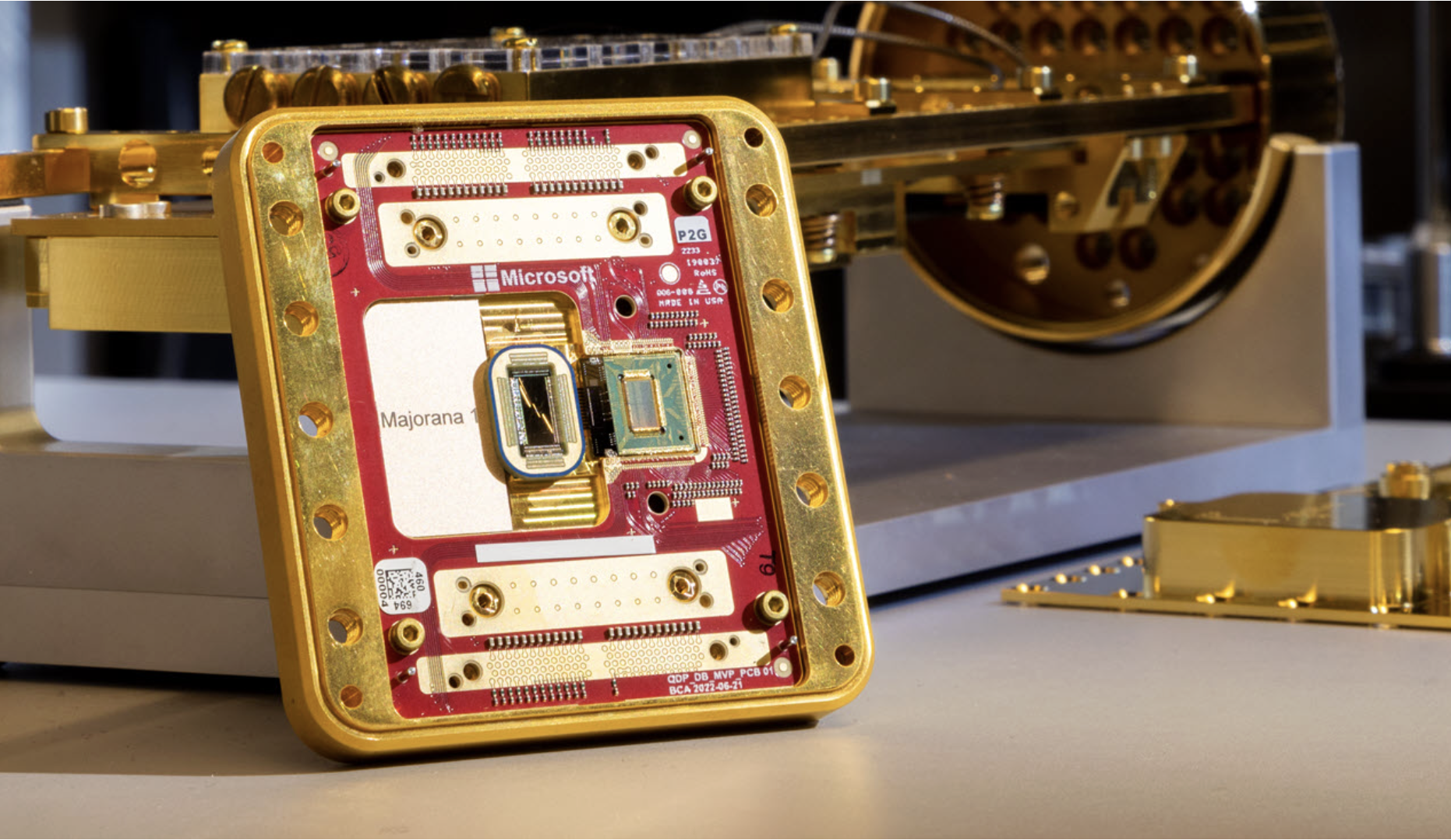
Almost a century ago, Erwin Schrödinger proposed his “Schrödinger’s Cat” thought experiment to demonstrate the absurdity of measuring quantum mechanics at the macroscopic level. In this hypothetical, a cat exists in a superposition of being both dead and alive until observed, when its state is confirmed. This idea—that a particle can exist in multiple states at once until measured—helps form the foundation of quantum computing. But what is quantum computing, and how could it shape international economics in the coming decades?
According to IBM, quantum computing is an emerging field of engineering and computer science utilizing “quantum mechanics to solve problems beyond the ability of … classical computers.” Rather than using a “bit”, or binary digit, a quantum computer uses a “quantum bit,” or a “qubit.” While a classical bit is either a 1 or a 0, a qubit can exist in a “superposition” of both 1 and 0 until measured. Each qubit has probabilities for these values. Each measurement favors the higher-probability outcome. As more qubits are added, the number of possible states—and the computing power—increases exponentially. However, we will likely not see a “true” quantum computer—whose work will not have to be verified on classical computers—until the late 2030s.
So what is this technology good for? It can benefit industries such as pharmaceuticals, battery development, and nuclear energy by running detailed simulations of molecular interactions. Quantum computers can also weigh possible scenarios, therefore facilitating manufacturing by presenting accurate estimates. Advancements in quantum computing would lower manufacturing costs and help companies sell goods at more competitive prices, potentially boosting exports. This makes quantum computing a major economic priority for many nations.
Despite these benefits, quantum computing also poses serious security risks, such as breaking complex encryption keys. Nations possessing a working quantum computer could potentially access classified documents and systems of other countries. Many U.S. officials are concerned the Chinese government could access U.S. energy grids and nuclear reactors with quantum computing technology, presenting a significant national security risk.
So who is winning the quantum computing race? It seems to be China. The Chinese quantum computing industry is projected to have $15.3 billion of public funding in the next five years, while the United States has put forward $6 billion, with $3.6 billion guaranteed by Congress. If the U.S. and its allies wish to lead the quantum race, they will need to devote significant public funds to quantum computing research.
With the deadline for a “true” quantum computer soon approaching, quantum computing will have a major impact on international economics and security, regardless of who gets there first. Although it may not have everyday applications that AI does, it enables researchers to reach goals exponentially faster. For this reason, policymakers and computer scientists must continue to monitor the quantum race and invest in secure, ethical quantum research to ensure security.
 Hemispheres