
By Eitan Cohen and Eva Zeltser
On February 5, 2026, the Center for Expanding Viewpoints in Higher Education (CEVIHE), a newly launched initiative at Tufts University that aims to cultivate ideological diversity in higher education, welcomed Haviv Rettig Gur to its Medford campus for a conversation on contemporary Israel-Palestine dynamics. A veteran Israeli journalist, Haviv Rettig Gur is a senior analyst at The Times of Israel, Middle East analyst at The Free Press, and host of the “Ask Haviv Anything” podcast. Previously, Rettig Gur served as a director of communications for the Jewish Agency for Israel, Israel’s largest NGO, and taught at prestigious pre-military academies.
Rettig Gur spoke at a pivotal moment in Middle Eastern geopolitics: in October of last year, Hamas and Israel agreed to a ceasefire in the Gaza Strip, ending approximately two years of active conflict that killed nearly 70,000 people. This moment has ushered in a plethora of questions about the region’s future. In January, at the World Economic Forum, U.S. President Donald Trump unveiled the Board of Peace, a U.S.-led international organization aimed at supporting the reconstruction and governance of the Gaza Strip.
Gaza: What Comes Next?
Against the backdrop of this international reconstruction proposal, among others, and the ceasefire, Rettig Gur turned to what he described as the most difficult phase of the conflict: Gaza’s post-war path. While the military campaign dominated headlines for nearly two years, he suggested that the war’s battlefield phase was, in some aspects, the more straightforward chapter. For Rettig Gur, the intellectually demanding work begins now that the fighting has subsided.
Rettig Gur argued that during the war, Israeli society rallied around clear objectives: securing the release of the hostages and ending the strategic threat to Israel. In moments of crisis, political differences were pushed aside. Yet as the immediate threat diminished, deeper structural questions returned. Who governs Gaza? What political order replaces Hamas? What responsibility does Israel bear in shaping that order?
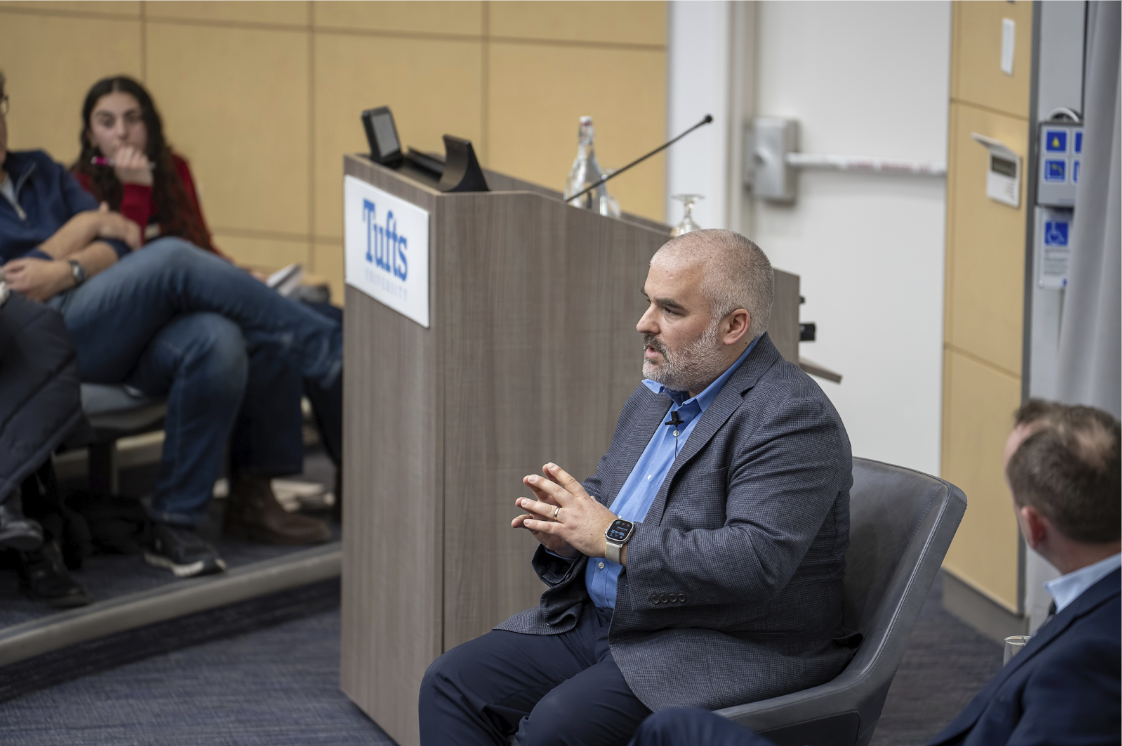
Rettig Gur emphasized that Israel now finds itself in an unprecedented position of strategic strength. Iran has been significantly weakened after years of preparing for a war with Israel: its proxies are strained, and its deterrence abilities are damaged. Hamas no longer poses the same conventional military threat it once did. Thus, in Rettig Gur’s view, the current situation becomes one defined by Israeli agency rather than Israeli fragility.
But it isn’t nearly that easy. Rettig Gur believes Israel is stuck in a pattern of reactive, self-limiting policy, largely due to the country’s domestic fragmentation. Competing ministries, ideological factions, and short-term political incentives make it difficult to develop and execute a long-term strategy for Gaza. In this environment, inaction becomes the default move.
The “Disneyland Strategy,” however, poses a potential solution. Initially used by the U.S. in the reconstruction of Iraq, this approach focuses on establishing a secure zone within a conflict-heavy region. Reconstruction and governance efforts are concentrated in this zone, allowing surrounding populations to visibly observe the contrast between instability and development, much as individuals outside Disneyland gaze into the park. Rettig Gur believes Israel can employ a similar approach. Rather than relying solely on continued military pressure, Rettig Gur argued that Israel should visibly develop and stabilize areas of Gaza under new governance structures. The goal would be to demonstrate what life without Hamas could look like: economic opportunity, strong infrastructure, and plentiful security. By helping develop a functioning, prosperous society, Rettig Gur believes Hamas would struggle to justify to its own population why continued conflict and deprivation serve Gazan interests. In other words, in Rettig Gur’s view, defeating a guerrilla movement with popular support requires dismantling its civilian support base, not just eliminating its fighters.
A New Western Approach
At the same time, Rettig Gur believes it’s difficult to understand how to tackle these issues when Western media often default to a moral lens. By frequently structuring the Israel-Palestine conflict around declarations of right and wrong, he argued that spectators are rarely prompted to ask the more difficult, analytical questions: Why do ordinary people support Hamas despite the atrocities they commit? How do Palestinians genuinely view this struggle? Rettig Gur contended that this moralizing approach can leave Western political discourse uninterested in the conflict’s deep roots. He further argued that this dynamic encourages reactionary media coverage that focuses more on explosive events than the “on-the-ground” situation. Consequently, observers are often left without the context needed to truly understand the conflict, distilling Israel-Palestine tensions into a simplified “repetitive cycle of violence.”
To remedy this, Rettig Gur emphasized the vitality of learning the narratives and logic of the other side, be it Hamas, Israelis, Palestinians, or any other key player. Without this deep analysis—recognizing that individuals on all sides act within narratives they believe to be legitimate—Rettig Gur warned that Western reporting will remain emotionally distant and unable to explain the on-the-ground reality.
 Hemispheres