
A Historical Analysis of Settler Colonialism in United States and Palestine
By Vanessa John and Sharon Li
The “Postcolonial Age” refers to the period following World War II, when colonies of Western imperial countries gained independence. Yet, in modern times, the realization of a truly postcolonial age remains elusive. Colonialism endures in the status quo, fueled by relentless greed, where colonizers rhetoric of “peace” is weaponized to obscure the more discreet operations of settler colonialism and suppress resistance. The original owners of the land are now forced into mere fragments of it, residing under the governance and dominance of those who continue to benefit from their dispossession.
Although peace treaties and declarations have been presented as pathways to harmony within colonial regimes such as Israel and the United States, the continued practices of suppression, surveillance, and displacement in both Native American reservations and Palestinian territories, reveal that these so-called agreements often serve as mechanisms to maintain control over indigenous populations rather than fostering genuine coexistence. Historian and scholar Patrick Wolfe asserts that settler colonialism is a structure rather than an event, the elimination of the Native does not solely derive from mass murder rather it is through the repression of the Native that normalizes and perpetuates the structure of the settler-colonial state. Therefore, in order for colonial projects to actualize, the “logic of the settler” must be employed to suppress the Indigenous population of the land they intend to occupy.
The illusion of allyship between the settlers and the Indigenous population is illustrated through the long trail of broken treaties the US has left in its journey of annexation. The Treaty of Dancing Rabbit Creek in 1830 marked the one of the largest land cessions signed by the U.S. government and was the first removal treaty put into effect under the Indian Removal Act. The Treaty of Dancing Rabbit Creek dictated the Choctaw Indians be removed from their homelands in Mississippi and migrate into the lands of Oklahoma, the name deriving from the Choctaw language words being “red people”. Although the Choctaw leaders signed the treaty, it was riddled with deceit, falsely promising safe transportation and adequate support, while veiling threats of destruction and military force. During the Trail of Tears, initiated by The Indian Removal Act of 1830, it is estimated that 15,000 Choctaw Indians were ethnically cleansed from their homes, and about a third of the people were killed, ranging around 6,000 Choctaws dead, but these numbers are likely higher. The land designated as “Indian Territory” was vastly different from the swampy terrain and fertile soil that the Choctaw and other tribes had relied on for their survival. The U.S. government aimed to either eliminate or assimilate the remaining Native populations by forcing several tribes onto unfamiliar and undesirable lands.
Then, the United States established the reservation system through the Indian Appropriations Act of 1851 as a means of controlling Indigenous populations. By relocating them to designated areas, the government gained control over their territories and facilitated land acquisition while actively subduing these communities. Further suppressing Indigenous identity, the U.S. government enacted the Dawes Act of 1887, which aimed to assimilate Native Americans by breaking up communal lands and allocating individual plots to Indigenous families, thereby undermining Tribal unity and severing ties to ancestral land. Although the Indian Reorganization Act of 1934 marked a shift toward recognizing tribal authority by encouraging tribes to form their own governments and manage their land, the U.S. government retained overarching authority, ultimately limiting the full autonomy of Indigenous lands and maintaining federal oversight.
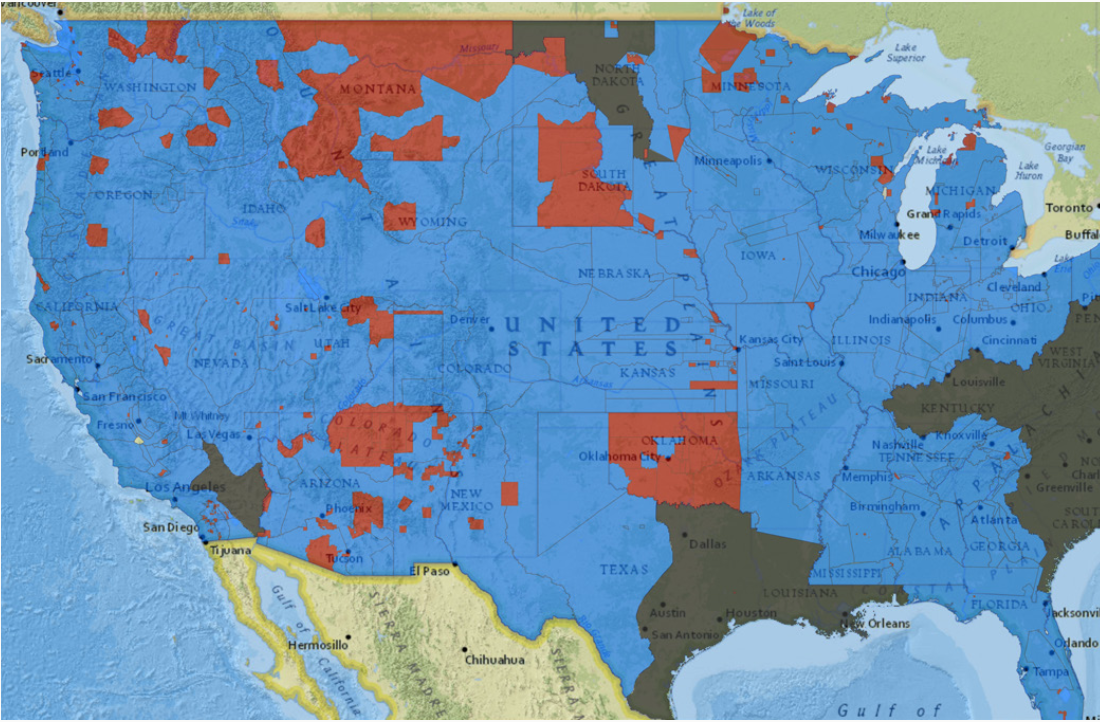
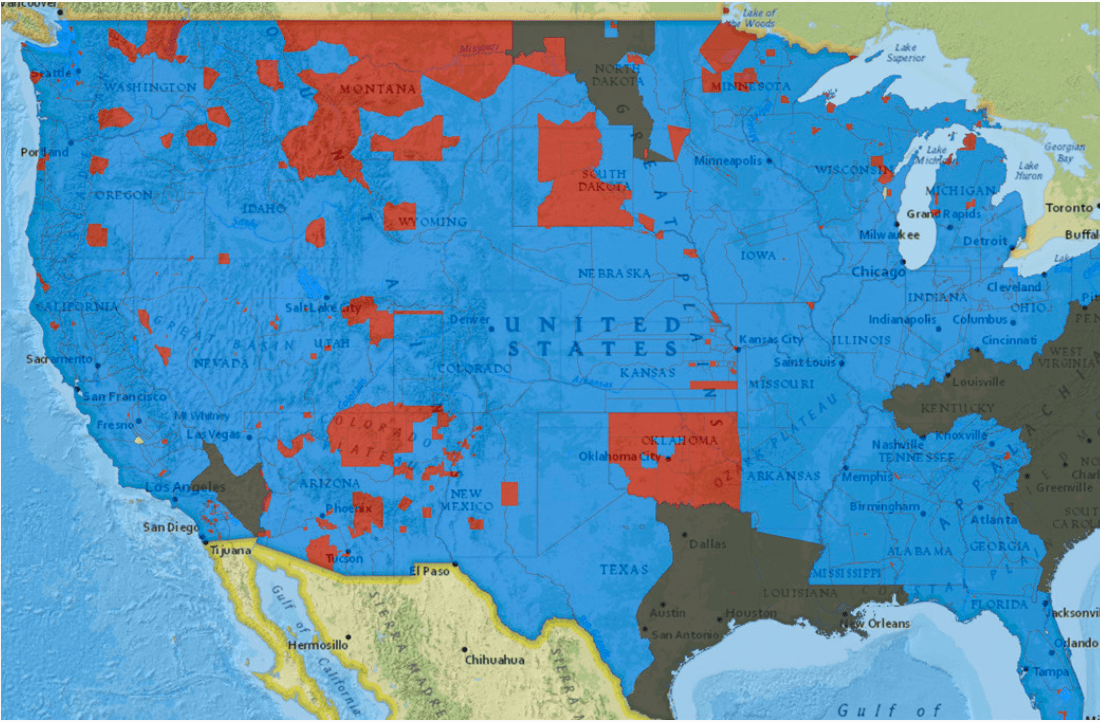
Red: Current reservations or land with most native sovereignty.
Blue: Stolen land through “cession.”
Gray: Original land stolen through colonization prior to 1776.
The U.S. continually utilizes tactics to undermine Indigenous sovereignty, which manifests in policies that strategically restrict autonomy. The government’s control over federal recognition processes determines which Indigenous communities are acknowledged and eligible for federal aid, adding an administrative barrier that stifles tribal sovereignty and resource access serving as a reminder that the U.S. federal government ultimately holds authority over Indigenous sovereignty. A key tactic is the manipulation of water rights and resources, as seen in cases like the Fort Belknap Reservation, where upstream water diversion by non-Indigenous farmers has limited water access for the Gros Ventre and Assiniboine tribes. Despite the Supreme Court’s Winters Doctrine, which ruled in favor of upholding Indigenous water rights, tribes still face significant challenges in securing access to this vital resource, as the U.S. government does not effectively intervene to protect these rights. Similarly, The Haudenosaunee people, with a deep ancestral connection to the Great Lakes, follow the Great Law of Peace, their framework of stewardship. However, the U.S. government has consistently overlooked the significance and precedence of this traditional law, prioritizing its own legal systems and objectives. As such, the U.S. government’s failure to include Indigenous perspectives and knowledge systems in environmental policy hinders sustainable, culturally aligned approaches to resource management as the US’s Great Lakes Charter and its Annex fail to address ongoing water diversions and their harmful effects on Indigenous communities. These diversions disrupt traditional food systems, health, and cultural practices, such as fishing, which is essential for sustenance. This exclusion of Indigenous perspectives from environmental policy on lands that have historically sustained Indigenous communities diminishes Indigenous sovereignty and depletes their resources. Thus, sovereignty is granted only within boundaries defined by the oppressor, on terms that ultimately serve the oppressor’s interests.
Israel employed various tactics to entrench its control, echoing colonial methods seen in other regimes, such as the United States’ treatment of Native American populations. Political Zionism, rooted in Theodor Herzl’s 1896 publication, “Der Judenstaat,” is a nationalist ideology aimed at creating a Jewish state in Palestine. Herzl did not seek to create this state through negotiation with Indigenous peoples of a territory but through guarantees provided by colonization. To Herzl, Palestine was “A land without a people for a people without a land” This same logic was applied by settler colonists in Turtle Island, where the Indigenous population, despite having long-established cultures and societies, were denied the recognition of a cohesive ‘nation-state’ and consequently their right to one. The Balfour Declaration facilitated Jewish immigration to Palestine and laid the groundwork for Israel’s establishment; this forced creation of a state within an existing state catalyzed the Nakba in 1948.
The Palestinian Nakba refers to the mass expulsion of over 750,000 Palestinian Arabs from British Mandate Palestine during the creation of Israel between 1947 and 1949, displacing around 80% of the Palestinian population. In late 1947, the United Nations approved a plan to partition Mandate Palestine into Jewish and Arab states, granting significant land to the Jewish state despite Zionist Jews, many of them recent European immigrants, being a minority. Following the plan’s approval, violence erupted, with Zionist militias, later forming the Israel Defense Forces, expelling Palestinians and committing atrocities in villages like Deir Yassin and Tantura. By the end of the fighting, Zionist forces controlled 78% of historic Palestine, leaving a large population of Palestinians displaced from their ancestral lands and marked the start of an ongoing process of settler-colonialism through the systematic ethnic cleansing and the theft of land and property from refugees and remaining Arab residents.
From 1948 to 1967, Israel implemented laws like the Absentee Property Law of 1950, seizing land from displaced Palestinians, and the Law of Return, which allowed Jewish immigration while excluding displaced Palestinians from returning. This institutionalized settler-colonialism helped solidify Jewish control over Palestinian resources and land, reinforced by a powerful military apparatus that asserted regional dominance. Israel’s tactics continued evolving after the 1967 war, following its occupation of the West Bank, Gaza Strip, and East Jerusalem. This period marked a phase of entangled colonization, characterized by settlement expansion, military control, and economic exploitation, drawing Israel into a prolonged conflict with Palestinians who increasingly found their land and livelihoods at the mercy of Israeli policies. In the present day, while Israel attempts to maintain a facade of legitimacy on the international stage, its ongoing practices of suppression and genocidal treatment of Palestinians have led the International Court of Justice (ICJ) to recognize Israel’s actions as violations of international law.
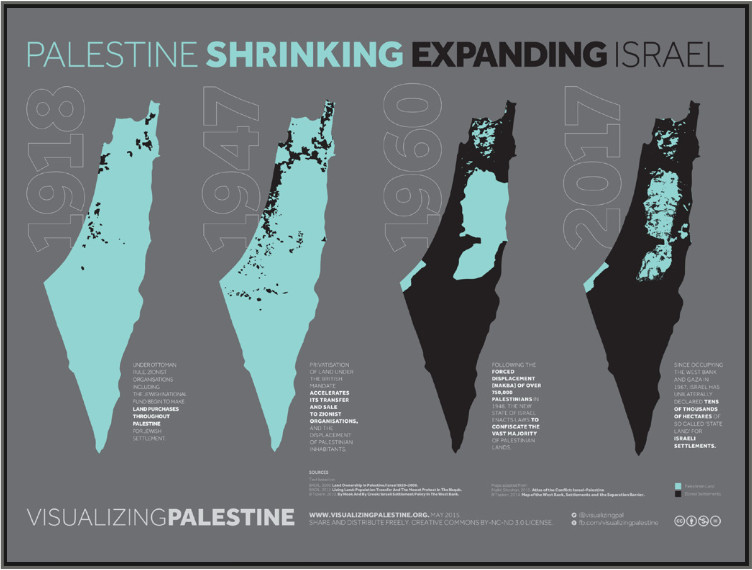
Since 1948, multiple UN resolutions have affirmed Palestinians’ right to self-determination and condemned Israel’s control over Palestinian resources and human rights violations. Integral to this right is the principle of permanent sovereignty over natural resources. Thus, as a temporary occupier, Israel lacks legal sovereignty over Palestinian territories and their resources, leading it to tactically utilize methods to further expansion through resource control. For example, in 1982, Israel illegally placed Palestinian water resources in the Occupied Palestinian Territories (OPT) under the Mekorot water company’s jurisdiction. This private Israeli entity has systematically redirected water from Palestinian territories, forcing Palestinian residents to rely on Mekorot for daily water consumption. While Mekorot provides water to Palestinians in the West Bank, it prioritizes supplying Israeli settlements, diverting resources from Palestinian allocations. As Israel controls 89 percent of the Mountain Aquifer’s water, using it predominantly to support Israeli settlements, Palestinians must purchase their water from Mekorot often at higher rates, further exacerbating their economic dependency and restricting access to a vital resource. This manipulation of water access exemplifies a broader strategy of colonization, as control over water resources not only suppresses Palestinian autonomy but also facilitates the growth and sustainability of Israeli settlements within the West Bank. By weaponizing water access, Israel has created a system that undermines Palestinian sovereignty while advancing its territorial and political objectives.
The legacy of colonial origins in both Israel and the United States continues to shape their political movements and policy decisions to this day. A striking example of these parallels can be seen in the Tohono O’odham reservation and the use of Elbit System surveillance towers along the U.S.-Mexico border. Elbit Systems technology has been implicated in serious violations of international law and Palestinian human rights. Since the escalation of violence in Palestine, the UN reports over 40,000 Palestinians killed by Israel’s ongoing collective punishment. However, many believe the actual number is likely much higher, with estimates reaching around 200,000 due to unaccounted individuals buried under rubble and other unrecorded effects. In fact, the same surveillance towers deployed by Elbit Systems at the U.S.-Mexico border and the Tohono O’odham reservation are also installed at Israeli military checkpoints in the West Bank, around the besieged Gaza Strip, and in the occupied Golan Heights. These enforcement practices exacerbate border violence, prioritizing control and exclusion over safety or humanitarian needs. At the U.S.-Mexico border, such measures have caused thousands of deaths from exposure, while in Palestine, surveillance and militarization perpetuate dispossession and erasure, framing Indigenous resistance as violations of settler-state laws and disregarding ancestral ties to the land.
The United States and Israel’s policies deliberately fragment Indigenous and Palestinian societies and territories to sustain political, demographic, and economic dominance. Through the weaponization of natural resources and strategic deployment of surveillance technologies, these practices suppress autonomy, entrench settler-colonial structures, and deny communities their kinship ties and stewardship of ancestral homelands. These systems perpetuate historical legacies of dispossession, erasure, and violence, underscoring the ongoing challenges of achieving genuine sovereignty for Indigenous and Palestinian peoples. Claims of peaceful coexistence within settler states misrepresent the ongoing reality of oppression. Such narratives obscure the enduring violence and dispossession that force Indigenous and Palestinian communities to share their lands with their oppressors—lands steeped in the blood and sacrifices of their ancestors. True liberation and justice require dismantling colonial systems and restoring self-determination to those whose lands and rights have been systematically taken, through initiatives like Land Back and the Right to Return.
This piece is a reproduction from its original issue in Hemispheres Volume 48 Issue 1. Read more here.
 Hemispheres