
By Max Roche
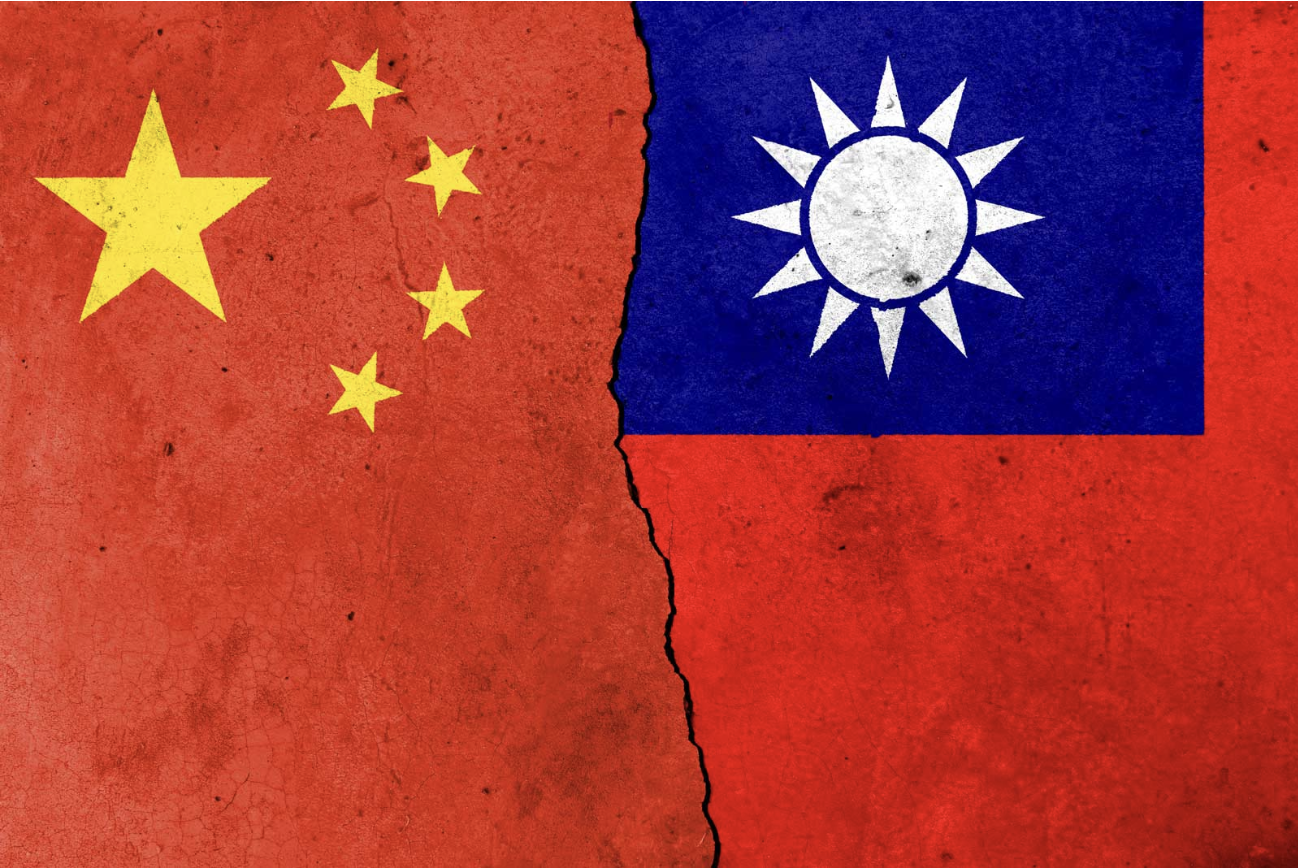
With President Trump slated to visit Beijing in mid-May of this year, the so-called “Taiwan problem” is expected to be front and center in discussions. A key aspect of the problem is the persistent threat of a Chinese invasion of the island of Taiwan, officially the Republic of China (ROC), which China maintains is an “inalienable part of China’s territory.” Such a scenario has loomed over Beijing-Washington relations for the last couple of decades, and for good reason: the U.S. military relies deeply on the ROC’s Taiwan Semiconductor Manufacturing Company (TSMC) for weapon systems and state-of-the-art AI technology. Given this reliance, American decision-makers have a vested interest in the continued independence of Taiwan, while China has an incentive to obstruct U.S. technological advancement by invading the island. Consequently, an abundance of research, authored by Washington think tanks and military scholars alike, has been dedicated to a potential conflict between the U.S. and China over Taiwan. However, I would argue that a Chinese invasion of Taiwan is unlikely, as it would need to be preceded by major shifts in the economic well-being of China in order to ever occur.
China, the world’s second-largest economy by nominal GDP, has leveraged decades of rapid economic growth into becoming the only nation with a credible claim to challenging American hegemony. China has been the world’s largest exporter of goods since early in the first Obama administration, demonstrating the country’s irreplaceable role in the global supply chain. Nonetheless, key weaknesses in the Chinese economy underlie any claim to global economic superiority. In 2025, for the fourth year in a row, China reported more deaths than births, leaving its birthrate at its lowest level since 1949. It is a monumental problem for a country that has experimented with everything from taxing condoms aimed at promoting unplanned pregnancies to subsidizing housing for couples, with little success. Despite the persistent efforts of Chinese officials, birth rates have continued to fall. The effects of this demographic shift are already evident, with forecasts from the Rhodium Group projecting China’s real GDP growth to range from 1.0–2.5% in 2026 and placing it closer to 2.5–3.0% in 2025, far below the reported 5.2% from Chinese officials. If this data is accurate, it suggests China’s economic position is considerably more fragile than Beijing publicly acknowledges. Furthermore, property sector investment continued to weaken throughout 2025, with sales, new starts, and land sales all declining by over 20% from 2024. With the majority of Chinese household wealth tied up in property, sustained declines in the sector make the Chinese middle class poorer, suppressing the consumer spending that any growing economy depends on. Despite this massive economic slowdown, China has continued to ramp up military spending in recent years to counter American military dominance.
Given the aforementioned economic dilemmas—persistent deflationary pressure in conjunction with a plummeting birth rate and a slumping property market—it’s worth asking whether taking Taiwan is even realistic for China at the current moment. The answer, I would argue, is categorically no because the cost would be unfathomably high for China, the U.S., and the broader international economy. Bloomberg Economics estimates that a Taiwan invasion would cause $10 trillion in economic aftershock, a number that surpasses the effects of the Ukraine-Russia conflict, COVID, and the 2008 Financial Crisis. The only thing separating Taiwan and China is the Taiwan Strait, around 80 miles wide at its narrowest point, which carries a fifth of global maritime trade. A conflict in and subsequent blockage of the Strait would produce an even more prolonged and unpredictable economic shock than the current Strait of Hormuz blockage in Iran. A Taiwan invasion would leave no room for safe passage through Taiwanese waters. Therefore, it wouldn’t be a question of guaranteeing safety through the Taiwan Strait, but rather of how to reroute trade entirely and best deal with cataclysmic disruptions to cargo and oil shipments.
Even if China were to calculate that the lives lost and economic pain incurred were secondary to the potential gain of holding Taiwan, taking Taiwan would not be easy. A Chinese amphibious campaign on Taiwanese shores would be more complex and elaborate than the 1944 D-Day landings, largely because China has very few suitable options for landing spots. Roughly 60% of the land surface on the island is mountainous and difficult to traverse. Additionally, Taiwan has developed “Hsiung Feng IIER” missiles with a range of 250 kilometers, which is enough to reach Chinese ships in and around the strait. Given this long range, Taiwan possesses the capability to significantly damage Chinese vessels the second they begin moving towards Taiwanese waters, making any Chinese attack costly before even reaching land.
Of course, there is also the question of what happens after a hypothetical Chinese victory. An island with a population that overwhelmingly disapproves of Chinese rule would not be worth the immense cost to govern it and could even become a political liability for Chinese President Xi Jinping. This isn’t to mention TSMC, which is believed to have destruction protocols in the event of China successfully capturing the island that would enable a scorched-earth scenario by erasing Taiwan’s semiconductor industry.
Furthermore, the Chinese Communist Party (CCP) derives significant credibility from the relative stability and economic growth it has delivered to its population. A Taiwan invasion would place that credibility at serious risk. The moment China commits to a full-scale military operation, it introduces variables it cannot fully control. Chief among them would be potential American military support for Taiwan, likely joined in some form by Japan, South Korea, and Australia, due to their close ties with the U.S. Historically noncommittal about defending Taiwan, the U.S. has seen the current debate over whether it would follow through on its protection of Taiwan intensify, calling into question the extent of an American response. However, American economic exposure to TSMC makes some response nearly certain. For China, the potential to turn an island invasion into a multifront war with military assistance from the U.S. or Japan risks stretching Chinese military capabilities thin. Additionally, the thought alone of how a conflict between two nuclear powers could escalate is a deterrent for all sides involved.
This is not to say there are no other ways China could pressure Taiwan into capitulation, aside from a full-scale invasion. China could impose a policy akin to the American embargo of Cuba in an effort to provoke a first strike from Taiwan, giving it cause to engage in conflict. Yet, sending its most in-demand population group, young, working-age men, into battle would hasten what is already a demographic crisis in the making. Xi Jinping knows this, and the reality is that, at the current moment, the country has too much to lose to invade Taiwan. Until China rectifies its domestic policies to ensure it can challenge the U.S. economy for years to come, there is no reason it will risk challenging them on the battlefield as well.

