
By Jasmine Griffin
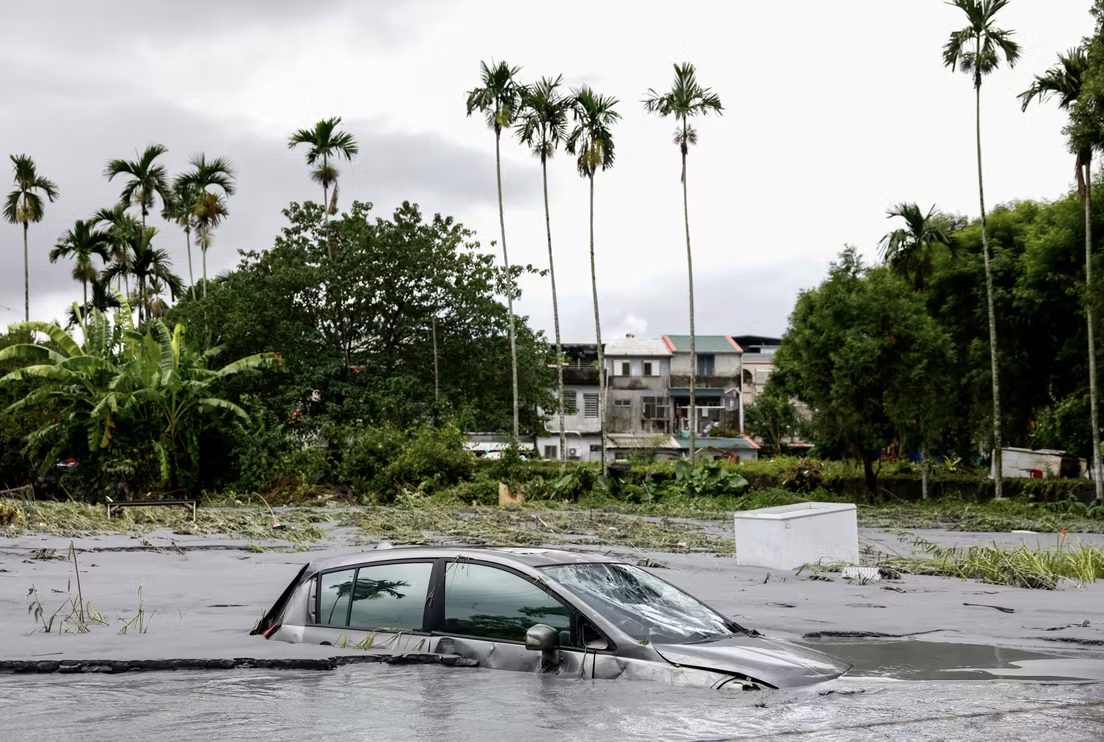
Within days, the scenery of a quaint, mountainous town in Taiwan turned into something nightmarish. Typhoons and high-magnitude earthquakes that have recently plagued Southeast Asia show the alarmingly high rate at which climate change is engulfing the region. Historically, Southeast and East Asia have been vulnerable to natural hazards, as exemplified by three major river deltas: the Chao Phraya Delta, stretching from Bangkok to Suphan Buri in Thailand; the Mekong Delta, extending from Phnom Penh in Cambodia to An Giang Province in Vietnam; and the Mahakam Delta in East Kalimantan, Indonesia. These low-lying delta environments that exist at the site of urban expansion simultaneously face the stress of sustaining agriculturally dependent economies, coping with greenhouse gas emissions from rapid urbanization, and confronting the impacts of sea-level rise and natural disasters. Who actually bears the brunt of these consequences? Looking deeper into this question exposes a dire reality and humanitarian crisis that transcends the borders of Southeast Asia.
The Problem of Environmental Injustice:
When discussing the impacts of global climate change in both developed and developing countries, environmental injustice–the disproportionately heavy exposure of poor, minority, and disenfranchised populations to environmental hazards, overexploitation, and global climate change–is central. In many Southeast Asian countries, coastal populations face significant wealth gaps since large segments of their populations are dependent on agriculture and fishing. The Mekong River, which flows through China, Thailand, Laos, Myanmar, Cambodia, and Vietnam, has suffered from overfishing, flooding from monsoons, and rising sea levels. The wet season brings about devastating losses of crops and rice production, accompanied by flooding that makes its way into village streets and threatens the livelihood of millions.However, despite emitting disproportionately high levels of greenhouse gases, those that live in Ho Chi Minh, another city in Vietnam, reside in modern housing and enjoy infrastructure tailored to the country’s environmental vulnerabilities. This structural disparity demonstrates the unjust manner in which the lower classes experience less protection from natural disasters despite releasing less harmful emissions than the wealthy who live comfortably in a metropolis.
Typhoon Ragasa’s Wake Up Call:
In Northern Luzon and Taiwan, Super Typhoon Rasaga, a Category 5 storm with sustained winds of up to 165 mph, severely flooded the Taiwanese town of Guangfu. This disaster killed 18 people, ravaged structurally weak buildings, and left nearly 700 acres of vital farmland inundated. If the world were two degrees Celsius warmer, the damage would be estimated to be 27 percent more severe. Such risk for catastrophes applies to many other small, rural townships across Southeast Asia, simply due to the region’s density of informal, structurally weak settlements in floodplains and storm-prone regions.
With historical mass migrations from rural areas to major cities in Southeast Asian countries, overcrowding is another issue, leading governments to funnel significant resources to these areas, often at the expense of rural communities.10 This inequality adds to the vulnerability of communities akin to the Guangfu township in Taiwan, and will only worsen in communities throughout Asia as the climate crisis approaches its climax.Confronting Environmental
Injustice in Asia

