
By Arjun Moogimane and Finn Barrett
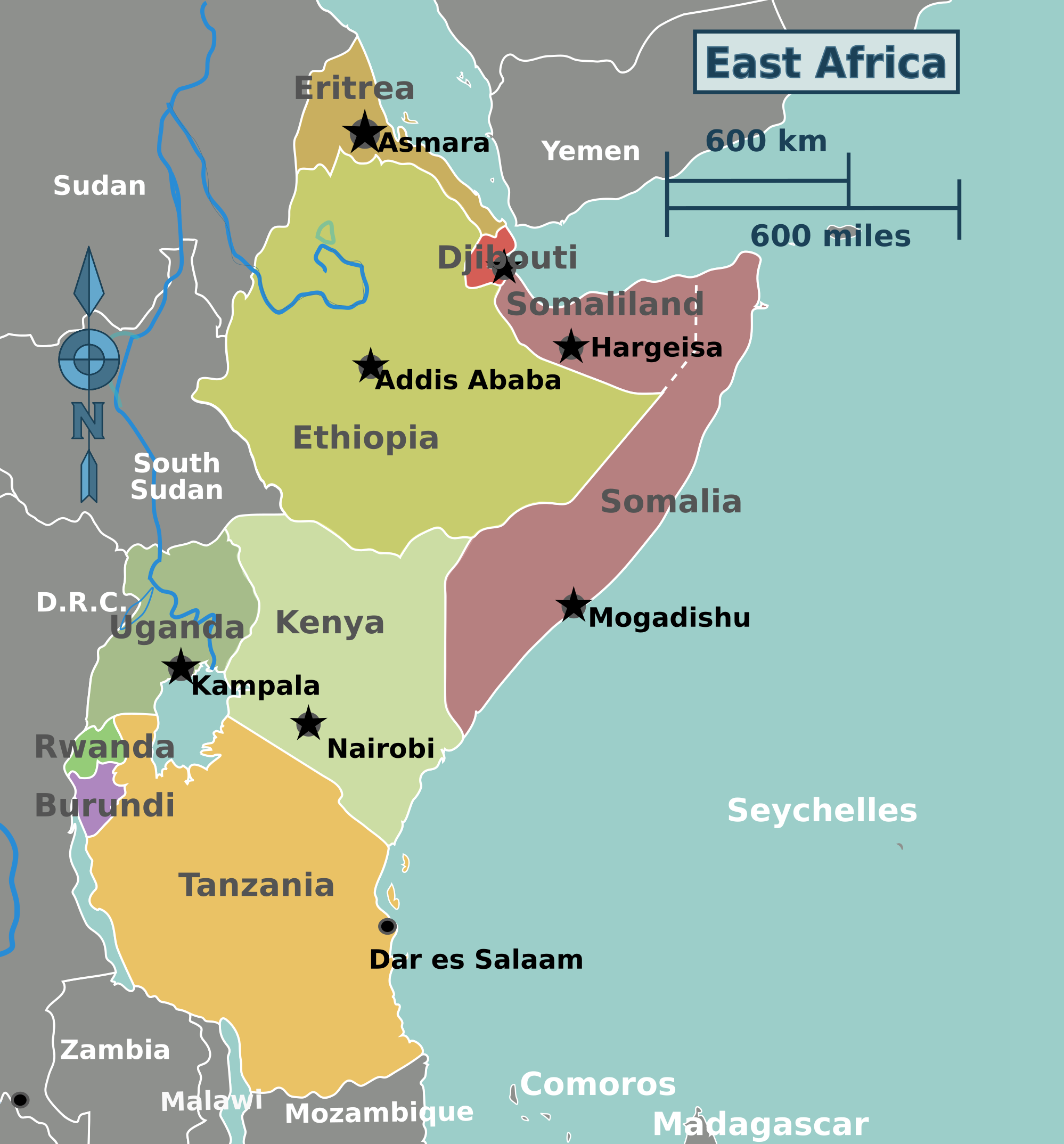
Few nations have direct territorial claims to global trade chokepoints. Djibouti, a small country in the Horn of Africa, is one of them, making it a focal flashpoint of global trade security. Its strategic position as one of only four countries with direct access to the Bab-Al Mandeb strait has made it very important to global powers who maintain active military influence around the region. Of those four, Djibouti is the most attractive to foreign influence. Despite recent shifts towards openness towards China, Eritrea has a long history of being closed off to the influence of foreign actors; Yemen hosts no foreign military bases, but is most closely aligned with the Saudi government while their legal government continues to struggle against Houthi rebels; and Somalia has much less land overlap with the strait. This leaves Djibouti as the ideal location for global powers to base their Red Sea operations. The United States, China, Italy, France, and Japan all maintain military bases near the capital of the nation, with the U.S. Camp Lemmonier being the largest foreign military base on the continent. These bases exist largely to protect those great powers’ access to the Bab el-Mandeb strait with the US, for example, intervening in late 2023 to early 2024 when Houthi rebels disrupted the passage.
Today, however, a more interesting relationship to examine is the one between China and Djibouti. As of 2025, Djibouti is carrying over $2B USD in foreign debt—a significant number when considering its GDP is only $4B USD. That makes its debt nearly 70% of its GDP, well beyond the IMF threshold for being in debt distress. Even more startling is that China owns nearly half of that outstanding foreign debt, making them by far Djibouti’s single largest creditor. Adding to the intrigue of this relationship is the recent opening of China’s first, and currently only, official overseas military base in Djibouti. China could have chosen anywhere for this base, but the strategic importance of the location—overlooking the entrance to the Bab al Mandeb strait, through which around 12% of all global trade passes—certainly played a big role in their decision. Therefore, the crux of the issue comes down to the relationship between these two countries and confirms that it is one worth examining.
Since its inception in the early 2010s, Chinese investment in Djibouti has been double sided in nature. It serves strategic and security purposes while simultaneously remaining closely linked to Djibouti’s infrastructural development. Despite Chinese investment in Africa picking up in the early 2000s, it wasn’t until 2013 that significant investment arrived in Djibouti. It was in that year that a Chinese state-owned company purchased a 23.5% stake in the Port of Djibouti. The half decade following the announcement of Chinese investment in the port was a busy one. In 2017, the two governments revealed the opening of the joint military base. Then in 2018 The Doraleh Multipurpose Port was completed by a state-owned Chinese partner, and in that same year, Djibouti became a part of China’s Maritime Belt and Road Initiative, an economic cooperation and development group led by China.
This flurry of investment raises the question of its success and impact: What has this massive influx of capital achieved for Djibouti? By some measures it has driven important successes. GDP doubled between 2013 and 2023, which caused infrastructure growth not only within its borders, but in the broader region of the Horn of Africa through projects like the Addis Ababa Railway project: Africa’s first electrified rail project between Addis Ababa and Djibouti’s capital. At the same time, aggressive investment and debt-trapping lending practices have left Djibouti in a position of financial peril. To combat this, in 2022, the government suspended debt repayments to Chinese creditors citing costs of debt servicing, and soon after a moratorium agreement was reached. Clearly the growth and investment has come at significant cost. Turning now beyond Djibouti, it is important to consider how this investment and Chinese influence more broadly has impacted the broader region.
One important downstream impact of increased Chinese investment has been growing concern from the West in regards to economic alliance shifting. For example, as Chinese influence rises, other global powers have noticed the United States taking a keen interest in the Somaliland independence movement. Somaliland is located in the northernmost region of Somalia, right alongside the border with Djibouti. Somaliland established an independent government from Somalia in 1991 and has been self governed ever since. The breakaway state enjoys a relatively democratic government with historically peaceful transitions of power. They have also received support from the United States in recent years, resulting in the proposition of the Republic of Somaliland Independence Act in 2025, as well as the 2023 National Defense Authorization Act which declared that Somaliland is to be recognized as a distinctly different part of Somalia. Furthermore, Ethiopia and Somaliland signed an agreement in 2024 which would allow Ethiopia direct access to the Red Sea in exchange for recognizing Somaliland as its own nation. Although the United States does not currently recognize Somaliland’s independence, there is legal precedent for them to do so.
The case of Chinese economic interaction in Djibouti stands as a particularly unique case in modern geopolitics: US-China competition for dominance over international trade routes has not only affected Djiboutian internal affairs but made it evident that the competition unfolding in Djibouti has rippling effects throughout the political economy of the Horn of Africa.

