
By Dror Ko and Max Druckman
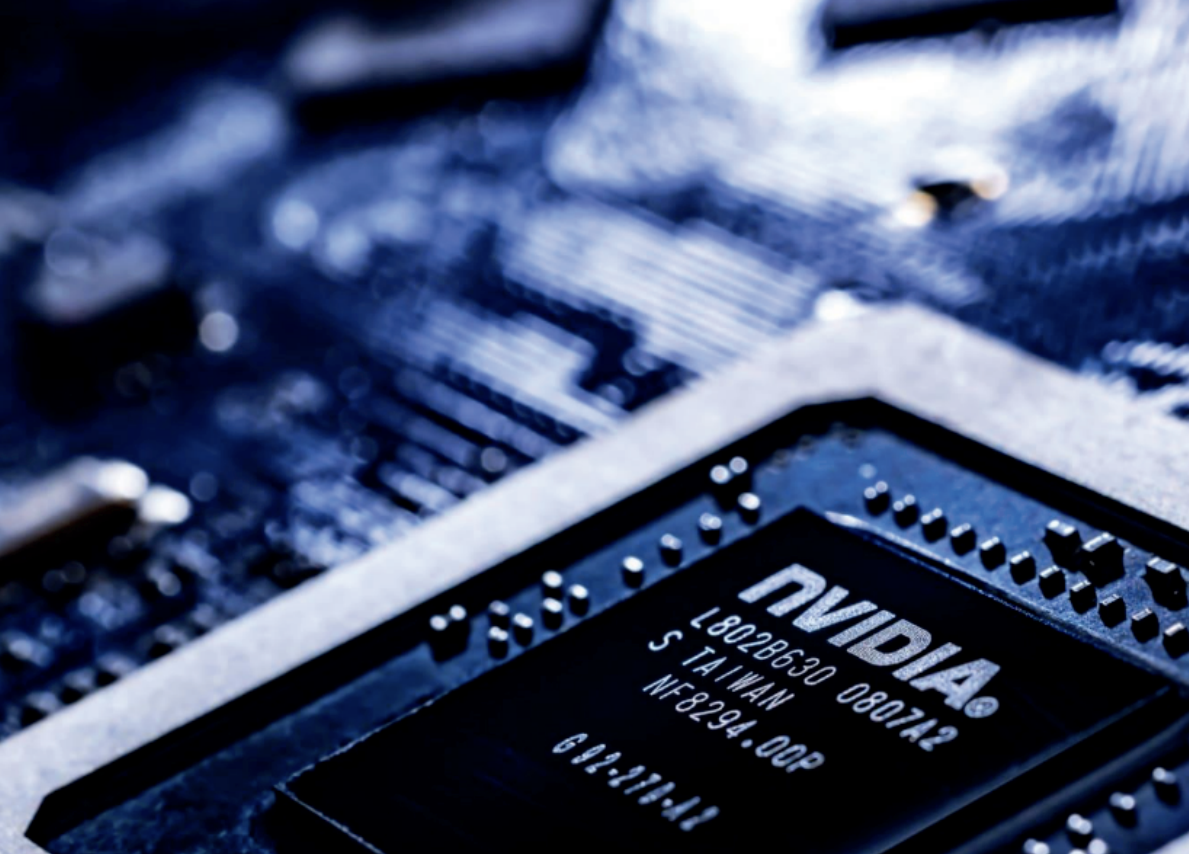
Whereas World War II was won with steel and aluminum, and the Cold War with nuclear weapons, the coming conflict between the US and China will be determined by silicon. This idea was first articulated by Fletcher’s Chris Miller in his 2022 book Chip War: The Fight for the World’s Most Critical Technology, in which he argued that the race for dominance in the semiconductor industry will define the contemporary balance of power. To summarize the situation, Miller wrote in a message to Hemispheres that, “[c]hips are the key driver of progress in AI and both the U.S and China are racing to create better semiconductors. Today, the U.S. and Taiwan retain a significant lead in chip manufacturing but China is spending billions of dollars trying to catch up.” From missiles to laptops, semiconductors are essential components of most modern technologies. To capitalize on using chips to develop AI, the world’s greatest powers are vying for primacy in this industry. In recent months, Xi Jinping and Donald Trump have exchanged public blows in an escalating trade war waged over the future of semiconductors. The broader dynamic is a multidimensional battleground with several key players, each possessing its own strategic interests and capabilities. The most advanced semiconductors are designed in Silicon Valley by corporations like NVIDIA, fabricated by Taiwan Semiconductor Manufacturing Company (TSMC), and are impossible to make without rare earth minerals controlled by the Chinese Communist Party (CCP). This article will examine the logistically complex semiconductor supply chain that is ensnaring the world’s most powerful nations in escalating economic warfare.
The past year has seen successive bouts of escalation in the Sino-American trade war. After Trump announced his “Liberation Day” tariffs in April, the response was prompt and biting. China implemented its own tariffs and constrained the global supply of rare earth minerals. These minerals, of which China is the world’s most dominant producer, are essential ingredients in everything from semiconductors to magnets used in electric cars. While sweeping tariffs and export controls are among Trump’s formidable weapons, some analysts believe that Xi’s iron grip on rare earth minerals constitutes his “high card.” At trade talks in May, June, and July, Treasury Secretary Scott Bessent resumed negotiations amid pressure from American manufacturers to bring rare earths back home. This pattern—raising tariffs, suffering China’s retaliation, and backing down—has been perceived as a weakness, prompting the widespread use of the acronym TACO (Trump Always Chickens Out). In early October, the CCP announced even tighter restrictions, declaring it necessary for foreign countries to obtain licenses to trade, even amongst themselves, any products containing rare earth minerals. Xi’s tightening of control is partly a bargaining tactic, increasing pressure on Trump ahead of trade talks scheduled for the end of October in South Korea. Nevertheless, Xi’s favorite bargaining chip casts a long shadow over the global semiconductor industry and spells out trouble for prospects of American primacy in AI.
Moreover, in the race to become the next major AI player, Taiwan has made itself an indispensable asset by producing over 90% of the world’s most advanced semiconductors. Located about 100 miles off China’s coast, the unrivaled productive capacity of TSMC positions Taiwan at the fulcrum of competing ambitions for global technological supremacy. Taiwan’s semiconductor industry dates back to 1976, when American chip manufacturing technology was transferred to the Industrial Technology Research Institute. Since then, TSMC has played a vital role in developing the global chip industry, yielding innovations like the “fabless” chip, akin to what Nvidia uses. Taiwan’s highly educated workforce, well-paying semiconductor production jobs, and minimal labor protections have ensured that its semiconductor industry has continued to flourish.
Hence, China’s aggression toward and claims of sovereignty over Taiwan, pose a significant economic risk to the region and the world. If China were to invade Taiwan, the global semiconductor supply chain would be shattered. Some scholars point to Beijing’s attempts at self-sufficiency in the semiconductor realm as a method for combating a potential disruption to the semiconductor flow if it invades Taiwan. Therefore, as the global center of the semiconductor industry and as the apple of the PRC’s eye, Taiwan both invites aggression from China and serves as a partial rationale for its pursuit of self-sufficiency. As Miller put it, “China’s threat to Taiwan is a major risk — both because of the security ramifications but also because Taiwan is an irreplaceable producer of semiconductors.”
Additionally, while many semiconductor companies have attempted to profit from the AI revolution, one company is best positioned to do so. Nvidia, the largest publicly traded company in the United States with a market capitalization of over $4.5 trillion, is ushering in a new age of semiconductor production and usage. Nvidia gained ground by producing more Graphics Processing Units (GPUs), as opposed to Central Processing Units (CPUs). GPUs can more easily handle large-scale calculations, in line with those necessary for large language models. A native of Taiwan, Nvidia’s CEO Jensen Huang has gained international headlines for calling Taiwan a “country,” as opposed to a region of China, the CCP’s long-held claim, adding a personal element to an already intense, burgeoning rivalry.
Nonetheless, Huang maintains that Nvidia’s mission is to ensure that “people can access this technology from all over the world, including China,” thereby expressing disappointment at Xi’s barring of Nvidia from the Chinese market. Huang had previously struck a deal with Trump, agreeing to pay 15% of Nvidia’s Chinese revenues to the US government, after a period without sales was ended by Huang’s intense lobbying. Whether Huang is motivated by “the advance of human society” or simply access to new markets, it appears that, thanks to an international smuggling network, his chips still pervade into China, though without publicity.
Thus, while Nvidia’s semiconductors may not induce the same fear as the Cold War’s nuclear weapons, the future of the standoff between the US and China will be defined by their necessity, availability, and ingenuity. The technology of the future could be the present’s primary issue.

