
By Gia Ghosh and Lauren Nadow
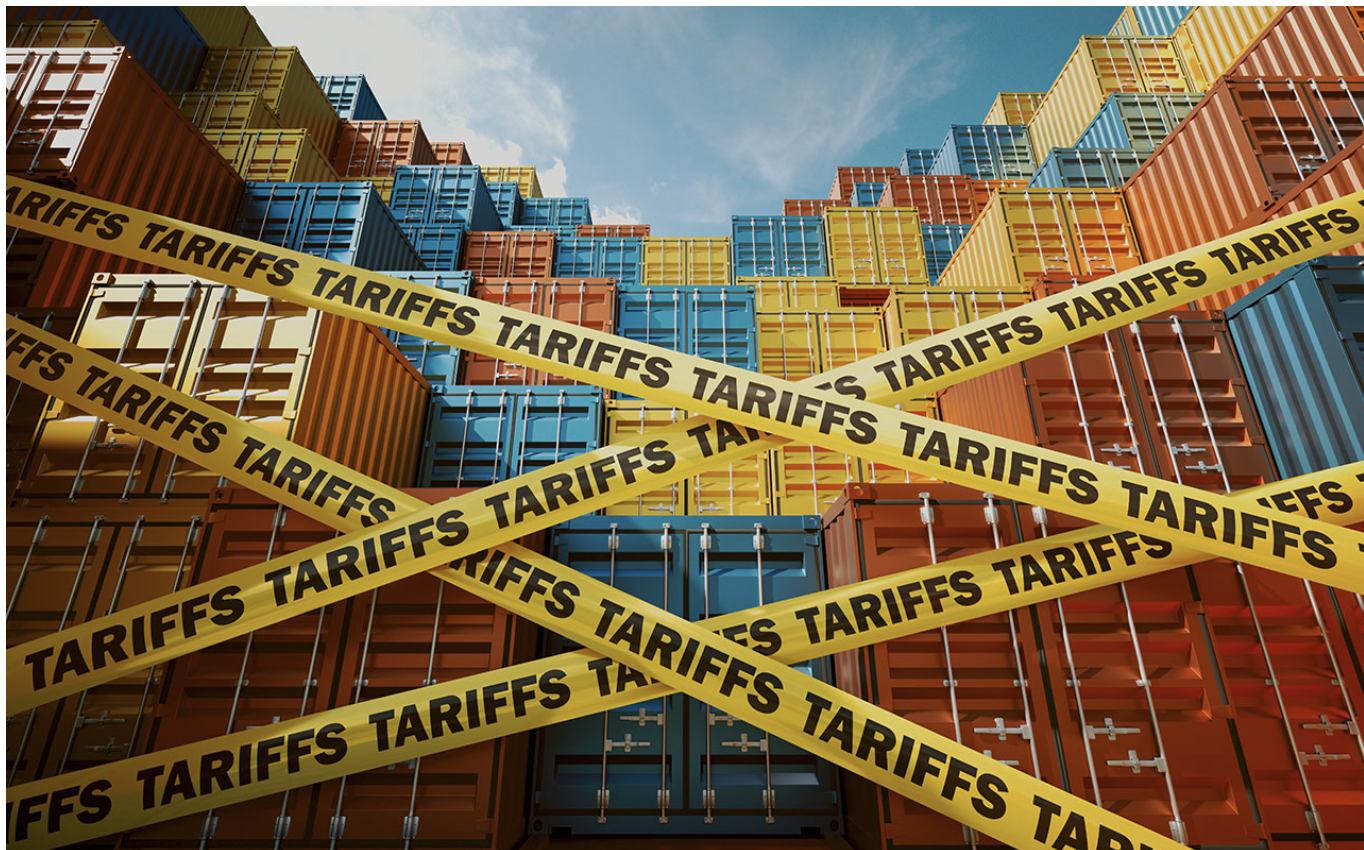
In early 2025, searches for “tariff” increased by 2,400% compared to 2024, following Trump’s election in 2024 and his use of the word during the presidential debate. Yet, only 45% of Americans know what a tariff is. Tariffs are “taxes imposed by a government on goods and services imported from other countries.” This means that when goods are imported, they may be taxed at higher values, which in turn results in higher prices for consumers.
In order to understand the relevance of tariffs today, one must understand the tariff’s evolution. Tariffs have long been employed as a tool with uses far beyond the range of exports and imports, and have been a prominent aspect of how nations interact since the dawn of international trade. Ancient tariffs in Mesopotamia, for example, were implemented for governments acquiring additional sources of revenue. Tariffs on imported goods became very common. Britain’s 17th century Navigation Acts required that goods imported to its colonies came via British ships, often with tariffs that discouraged buying from foreign competitors.
Eventually, tariffs became a policy tool for the United States. Tariffs were the primary source of revenue following U.S. independence in 1776, and quickly became a source of contention within the country. The 1828 “Tariff of Abominations” raised the price of raw materials and manufactured goods, angering Southern politicians and businessmen who felt victimized by Northern industrial power. The 1930 Smoot-Hawley Tariff Act aimed to combat the effects of the Great Depression by raising U.S. tariffs on imported goods, prompting retributive tariffs from other countries and a global collapse of trade.
In modern global relations, tariff agreements can be interpreted as a bridge to strengthen diplomatic ties. The 2025 U.S.-Indonesia trade agreement cut tariffs on 99% of goods, further boosting trade in technology, agriculture, and green energy. This deepened economic cooperation, thereby strengthening security ties between the U.S. and ASEAN.
Although some states view tariffs and tariff agreements as an opportunity for connection, many disapprove of tariff use, especially regarding the U.S.. The use of tariffs can often be seen as a barrier, specifically during the 2018-2020 U.S.–China trade war, during which the U.S. imposed tariffs up to 25% on $360 billion of Chinese goods, prompting China to retaliate with its own tariffs on U.S. exports.
In the modern day, tariffs have transformed from being a means for gaining revenue to a strategic instrument for both economic and political ends. New tariff rates for dozens of countries were introduced in August, including a 50% tariff on Indian goods, 30% tariff on South African goods, and 20% tariff on Vietnamese goods. The announcement comes in the wake of ongoing exchanges of threats from both China and the U.S. regarding 100% tariffs. Tariff policy has led more than 30% of firms surveyed in the first quarter of 2025 to identify trade and tariffs as their most pressing business concern, which is a sharp increase from 8.3% in the previous quarter. This rapid rise points to firms’ heightened sensitivity to tariff-related economic disruptions, reflecting widespread concern among business leaders about the potential economic consequences of recent tariff proposals.
President Trump was accused of sending the global economy into turmoil upon his announcement of the introduction of tariffs. Although financial markets have since recovered, the International Monetary Fund predicts that tariffs will still lead to uncertainty and slower economic growth. Important U.S. trade partners, such as Canada and Mexico, are experiencing an increase in unemployment rates, while the U.S. itself is experiencing rising inflation and a weak job market.
Tariffs are a double-edged sword in international economics: they can act as barriers that provoke retaliation, disrupt global trade, and generate economic uncertainty, whereas their removal can serve as a bridge, fostering economic cooperation, strategic alliances, and diplomatic trust. The interpretation and use of tariffs is often case-dependent, and can be viewed as both a tool for policy and a source for tension in global trade.

