
By Evan Krautheimer, Rogers Tan, and Sam Weinstein
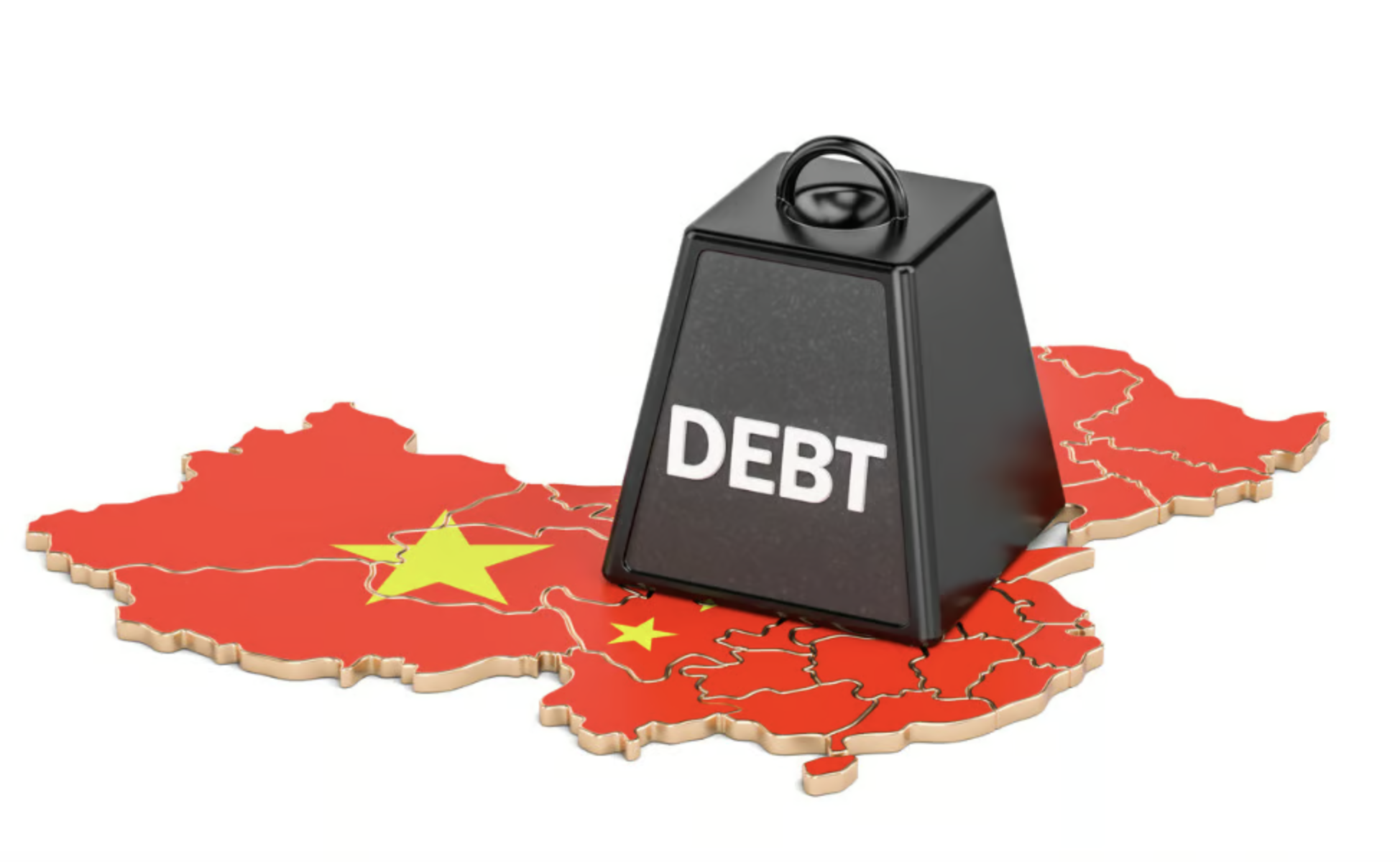
Since the 1990s, China has registered impressive growth rates, fueled by market-oriented reforms, extensive trade liberalization, and greater integration into global supply chains. This sustained expansion allowed the Chinese economy to outperform its peers, making it the second-largest economy globally, and rapidly closing in on US economic dominance. Historically, China’s GDP growth rate averaged an astounding 8.9% between 1980 and 2012, before moderating slightly to 6.4% from 2013 to 2019. Despite this period of consistent substantial growth, these achievements have been accompanied by the steady buildup of structural imbalances and rising financial vulnerabilities. The country’s immense growth was predicated on a model that favored rapid capital accumulation and heavy investment over consumption. To maintain their appearance of growth, Beijing has injected massive credit, and China’s banking system has swelled to a monumental $59 trillion, with over $30 trillion in new bank assets since 2008. Excessive investment in infrastructure and housing during the 2010s, enabled by persistently high household saving rates, has led to elevated debt levels for both property developers and local governments.
Real estate has long been the most critical sector for China’s immense growth, but the era of robust returns from this sector appears to be concluding, transforming it into a source of economic vulnerability. Real estate investment accounted for more than 10% of China’s GDP in 2020 and 2021 and was responsible for approximately 1.3 percentage points of GDP growth annually between 2010 and 2020, indicating how important real estate is to the Chinese economy.
The Chinese property and construction sector’s collapse since 2020 has had a profound impact on household wealth and financial stability, wiping out an estimated $18 trillion. The financial repercussions have been particularly severe for Chinese families, exceeding the impact of the 2008 U.S. financial crisis on American households, as Chinese households today have as much as twice as much of their net worth in real estate compared to Americans at that time.
Empirical analysis confirms that real estate construction is running into diminishing returns. Decades of construction at “breakneck speeds” have dramatically increased the quantity and quality of China’s housing stock. Per capita living space rose from 7.1 square meters (71 ft2) in 1990 to over 48 square meters (517 ft2) in 2022, a level that reaches or nears that of many wealthy advanced economies. The sheer volume of cumulative building suggests the pace of construction must shrink significantly over the next two decades, limiting the growth potential of this market. Correction is necessary to bring the sector back to a sustainable size as demand for housing is projected to decline by 35 to 55 percent over the next 10 years. Ultimately, China’s reliance on its real estate market as a primary growth driver is no longer viable. While the market currently benefits from debt-fueled subsidies to project short-term stability, this approach is unsustainable. China must face this reality and prioritize diversification away from continuous real estate expansion.
China’s local government debt problem is another of the consequential but veiled risks to China’s long-term economic health. Over the past decade, local authorities, especially those strongly focused on new industries like AI or electric cars, have relied heavily on Local Government Financing Vehicles (LGFVs) to keep the projects that are under deficit funded. These infrastructure or industrial projects are either led by subsidiaries of state-owned enterprises or the government itself, and are often too large or too risky to fit within formal fiscal limits. Thus, these entities borrow money through bonds and bank loans, allowing cities to maintain high investment growth with steep liabilities. Today, the combined debt is estimated to exceed 100 trillion RMB, equivalent to almost 13.7 trillion USD.
The structure of this debt is as perilous as the debt itself. Many LGFVs depend on transfers from the central government to support their liabilities. In poorer inland regions, fiscal stress has already forced spending cuts and delayed public salaries because of the reductions in local investment. The economy almost entirely depends on central bailouts. This growing reliance on Beijing’s interventions reinforces political centralization. Thus, the local debt issue is not just a financial challenge, but a structural weakness embedded in how China’s growth has been planned for more than a decade.
On the optimistic side, many people believe that China’s debt is fundamentally different from any other emerging economy. The debt itself is domestic, meaning it is RMB structured and largely held by state-owned banks. The risk of a total collapse of this debt is limited. The central government will always be able to maintain the status quo. One way would be rolling over the current old short-term loans with new long-term bonds, giving local governments more time to pay the new debt. The government also uses its control over state-owned banks to keep the current system stable. Banks can be ordered to extend deadlines, lower interest rates, or restructure payment structures when borrowers face troubles. These measures make the possibility of a wider financial crisis significantly lower, at least in the short term.
Despite its internal makeup, many, including Chinese officials, see the current system as fundamentally unsustainable. To these critics, the debt crisis is not a temporary liquidity issue but the result of an exhausted financial model, where local governments depended on rising property values and continuous investment to generate revenue. For them, that model no longer works in the current state of China’s economy. Productivity growth has fallen below 1%, and demographic decline has reduced both the labor force and housing demand. Political centralization has constrained local innovation and private-sector vitality. Debt has increased, a result of funding to stimulate the economy and projects, while the strict control of cash flow inside government and state-owned enterprises often slows down the process, creating a self-contradictory system. Without reform, China might enter a prolonged period of stagnation. The real danger is not an immediate financial collapse, but the slow erosion of growth potential under the weight of a debt-dependent system.
Tufts’ own Michael Beckley, an expert on U.S.-China relations, examines this question of Chinese economic vitality in a recent piece published in Foreign Affairs, titled “The Stagnant Order and the End of Rising Powers.” Beckley posits that the decades of national investment and growth that have powered China into competition with the United States may be nearing their end. Beckley cites “three perilous bets” that gross output will prove more important than net returns, that showcase industries can overshadow lack of economic dynamism, and autocracy can outproduce democracy, all of which are on their way home to roost. While these gambles have generated “spectacular output,” Beckley warns that such liabilities on a national and global scale can be “decisive” in a country’s downfall.
In this article, Beckley argues that China’s growth is hinged upon these “gambles.” Similar to the concerns diffused across economic circles about the condition of America’s debt, China’s situation poses a danger to its global influence and push for hegemony. As mentioned, China’s debt first reared its ugly head this decade with the real estate collapse of 2020. This collapse revealed the fragility of what was once believed to be a cornerstone of Chinese national investment. Whereas in the United States, a real estate crisis meant a collapse of an asset of the banks, in China, it was the people. Beckley notes that middle-class households were “stripped of their life savings,” as both disposable income and consumption have stalled at $5,800 per person and 39% of GDP, respectively. While China hopes to make up for losses such as this by “subsidizing strategic industries,” specifically R&D sectors dominated by EVs, batteries, and renewable energies, these areas altogether only make up “barely 3.5% of GDP.” As a cornerstone of their “gamble,” these industries look to at least attempt to offset the mounting costs. These pits of liabilities, combined with a future contingent upon both a working-age population that is only a third of which are high school educated, and an elderly population of 500 million deep, point out the hemorrhaging that may be upon the CCP.
So, is this to be the fate of China? That part is not certain. Actions such as disarmament and detente with the U.S. could theoretically bring down over-spending. However, as Beckley points out, China does not see concession as an option. Backing down on spending would mean leaving these debts sunk and their military stagnant as they relinquish any hope of keeping pace with the Americans. Thus, from a pragmatic standpoint, this dead weight which originates in spending to keep up with the U.S cannot be simply willed away. As a seemingly core part of the aggression between the two powers, Chinese debt will not be traded be traded away with a treaty.
Will these debts be quelled by another great Chinese leap? Or will they prove too massive to overcome as the United States achieves its “Stagnant Order” as Beckley and many others pose? Only time will tell.

