
By Sasson Ziv-Loewy
While UK-US relations have been rocked in recent times by Donald Trump’s insistence on tariffs as the sole conduit of international trade, UK-EU trade relations are currently dealing with opposite problems. Brexit’s immigration and self-determination narratives may have flooded the headlines surrounding the UK’s decoupling with Europe, but the exit of the UK from the European single market is having consequences on the same scale.
The European single market, while not as flashy as the EU, commands vast importance within the European economy: the standards and regulations implemented by the European single market have a huge sway over European affairs, particularly, imports and exports.
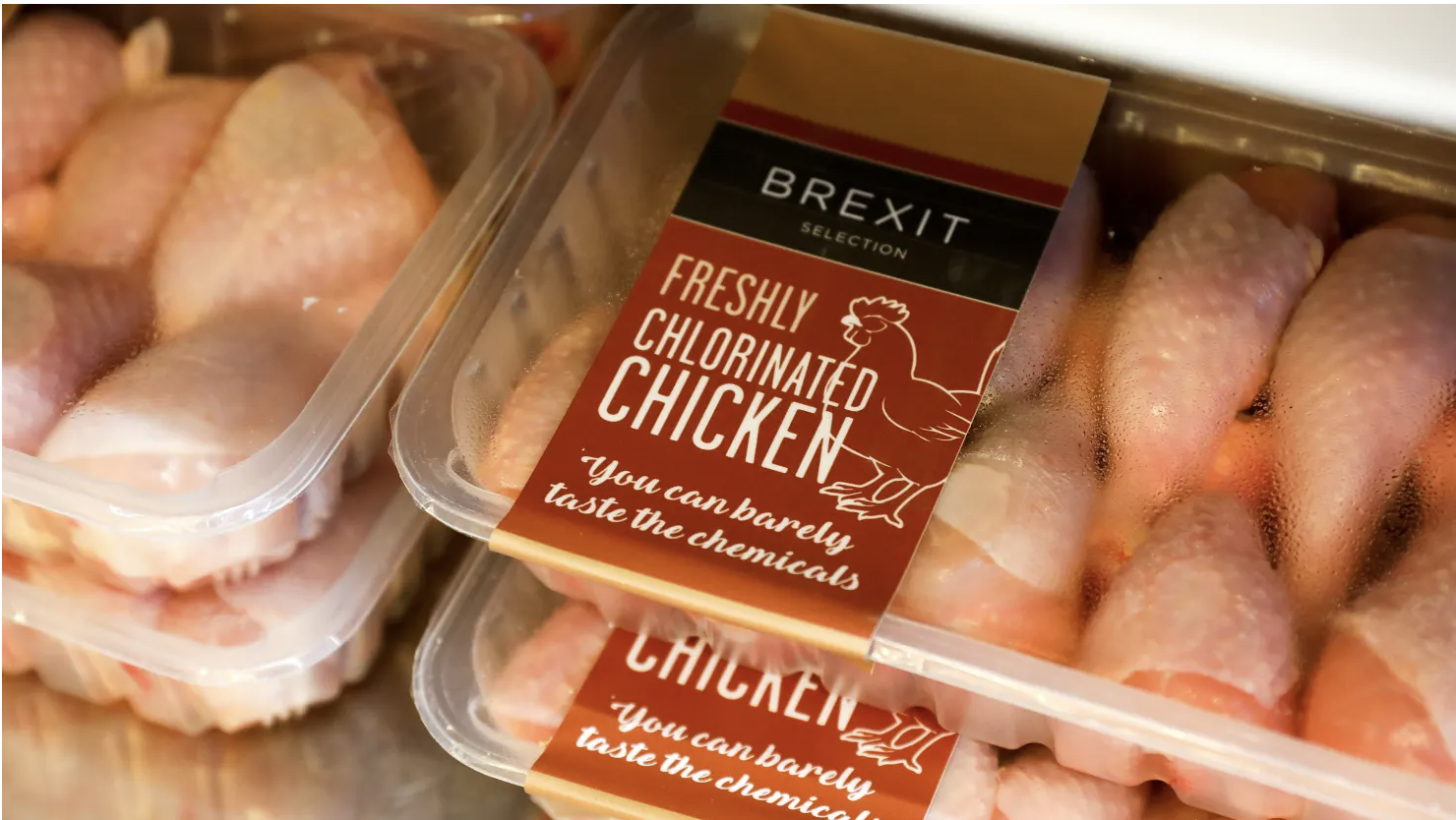
Take the example of chlorinated chicken. For many years, the United States has been pressuring European countries, particularly the UK, to accept shipments of chicken cleaned in baths of chlorine. While a member of the EU, it was impossible for the UK to break with the standards of the European single market, which don’t allow chlorinated chicken. However, now that the UK is no longer a signatory, the US has redoubled its efforts to force its chlorinated chicken on the UK. After a drawn out saga, the UK decided to reject chlorinated chicken, primarily as a result of the sheer disgust expressed by the British public.
The example of chlorinated chicken is, however, not indicative of the UK’s approach to trade; while the UK has not yet stooped to the level of US standards for agricultural imports and exports, the UK has by no means raised their own standards to those of the EU. This, currently, is the largest trade barrier between the UK and EU; these non-tariff barriers comprise most of the decline in trade, and the present debate within the UK to solve this issue is a persistent and existential one.
It seems that, despite the Europeans themselves concluding that chlorinated chicken poses no credible health risk, the UK still finds it in their best interest to align their standards with those of the European single market, or at least has decided against stooping to US standards. Presently, given the UK’s awkward position on this global trade spectrum, there is a lively debate over how to best arrange the UK’s standards for goods. The UK lowering its standards to those of the US is implausible, as non-tariff barriers are already damaging the UK’s trade with the EU, and the fact that almost half of UK trade is conducted with the EU emphasizes the importance of this relationship. At this moment, rejoining the European single market seems effectively impossible, however, a plausible alternative is for the UK to alter its standards to match those of the European single market. As the UK would be de facto included within the European single market for all intents and purposes, this would solve many of the UK’s trade problems by eliminating non-tariff barriers. Nevertheless, whether this solution has the political will behind it to be feasible is another question altogether.

