
By Sarah Garrett
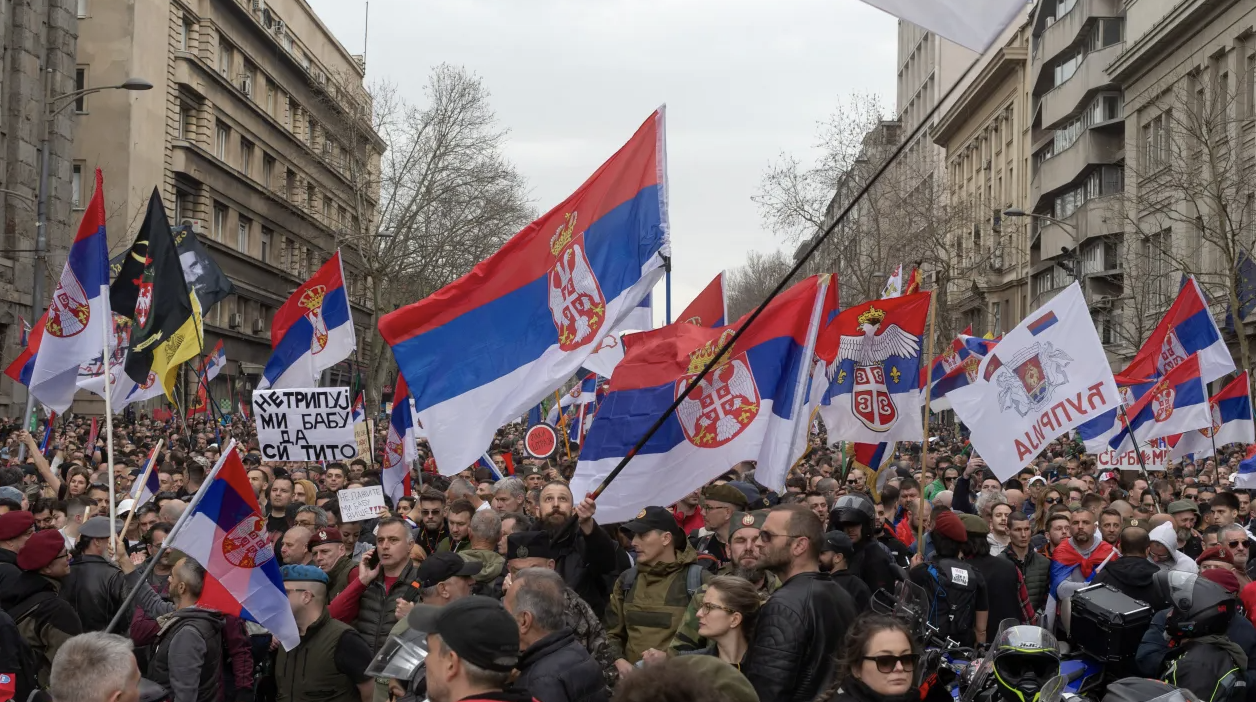
I spoke with a Tufts architecture student in her junior year, born and raised in Belgrade, Serbia. She has been active in recent Serbian student protests in her hometown and demonstrations in support of the student movement in Boston.
She has requested to remain anonymous, concerned that the Serbian government might target her for her association with the student movement.
While she feels her opinions reflect those of other students, she wishes to clarify that the statements made in this interview are not on behalf of the Serbian student movement, nor the Boston demonstrators.
For more context, please see: A Reckoning for Serbia: Massive Anti-Corruption Protests Persist
What did the collapse at Novi Sad make you realize?
We are living in a system that has completely neglected the safety of the individual. It no longer cares for us as citizens but only cares about power and money.
Are there any human rights that you wish to see protected in Serbia?
The right to speak freely without being potentially arrested or questioned by the police.
People have lost [a lot] due to speaking up. They have lost their jobs and been fired. They have had their income taken away or limited.
What can you tell us about the community Boston Stands with Students?
It’s an independent group of people that have come together through these gatherings, standing in support of [Serbia] and the students. […] A really beautiful part of what came out of this for people living in diaspora, specifically in Boston, is that we’ve met each other. This sad event has brought us together for the first time.
What has it been like seeing the EU condemn state repression in Serbia?1
It’s encouraging. […] I’ve been dissatisfied with the fact that the EU has not spoken sooner.
If the EU is speaking up about these things, then it gives more legitimacy to the issues.
The end goal [of the protests] is not reaching the EU. Recognition and EU support is important in putting pressure on Vučić but also on the rest of the government to fulfill their public service towards the [Serbian] people and not break international law.
Was there a moment in the protests you’ve attended that stood out from others you’ve attended?
It was around December 20th [2024], at one of the main roundabouts in Belgrade. There was a large protest that was announced and organized by the students, which we all went to. I mean, my family, my friends, and many people I know.
Everything at the protest was centered around celebrating the lives lost to the collapse. There was 15 minutes of silence that happened, where 100,000 people went silent. The only thing you could hear was the occasional cry of a baby.
There was something in being together in the middle of winter, outside, with so many people from your city that made you feel like this was different. […] Everybody felt like we needed to get out of this situation. We need to get out of the darkness that we’ve been living in.

