
By Dora Zhang and Lilianna Garber
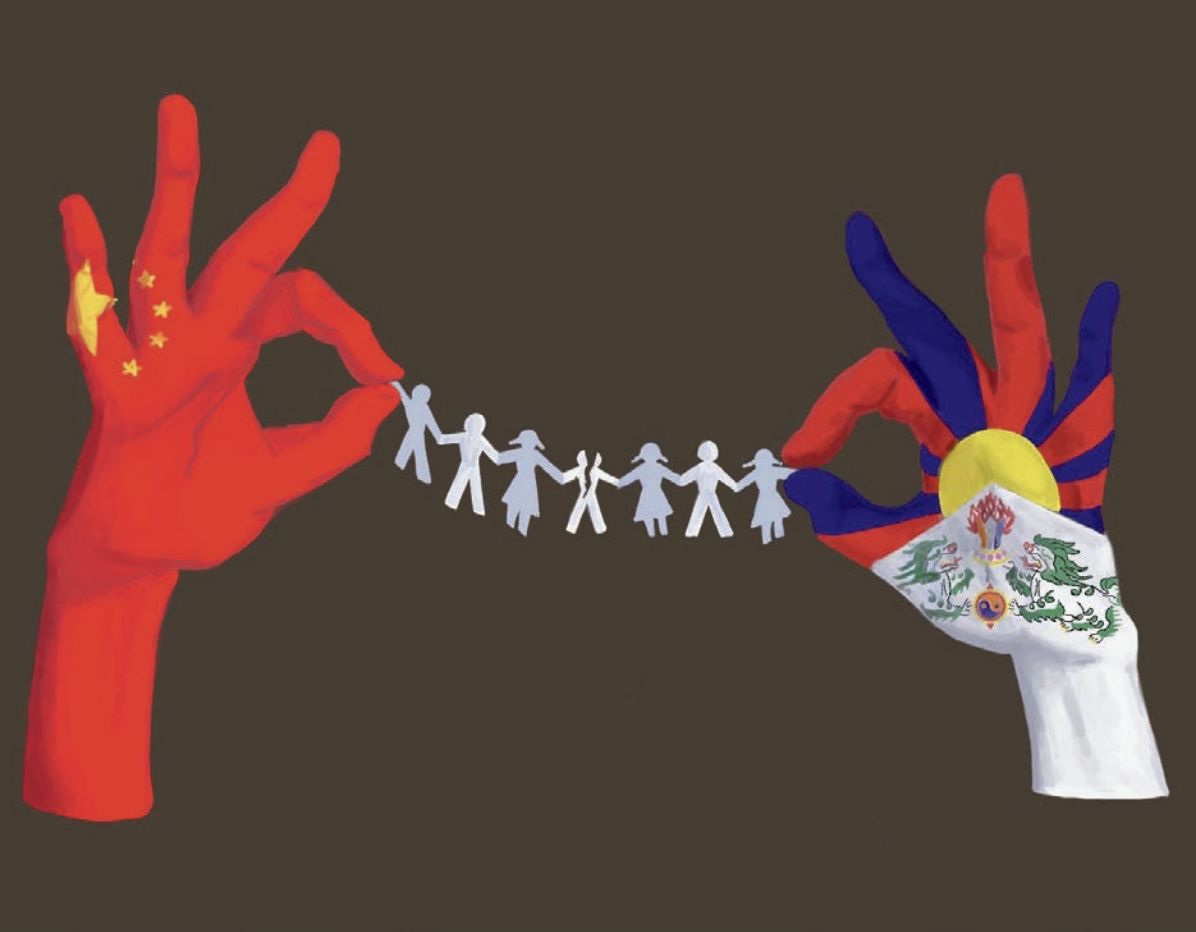
The Tibet Autonomous Region (TAR), a province of the People’s Republic of China (PRC), is home to 3.66 million people. Due to their distinct culture, language, and religion, the people of Tibet do not identify themselves with the Han Chinese. Originally seen by the Dalai Lama, a spiritual leader and patron saint of Tibet, as an area for religious freedom, conflict between the Tibetans and the Chinese Communist Party (CCP) has grown over recent years.
As a result of the oppression and forced assimilation by the Chinese government, human rights issues in Tibet are rampant. Thousands of Tibetans face death, and tens of thousands flee to India as refugees. Resistance to Chinese oppression is often ineffective, usually resulting in further human rights violations against minority religions and ethnic groups, including Tibetans, in China. This issue became especially pertinent when the CCP began to shut down all cultural and religious beliefs that they deemed to be signs of “terrorism, extremism, and separatism,” also known as the “Three Evils.”
Religious repression is the CCP’s most apparent human rights violation. Tibetans face restrictions in freely practicing Buddhism, as monasteries are being monitored by the Chinese government. Furthermore, the Dalai Lama was forced into exile in 1959. He fled the palace days after meeting with a Chinese general because the People’s Liberation Army, China’s land, sea, and air forces unit, killed thousands of Tibetans protesting the conference. The Dalai Lama was granted asylum in India and now resides in Dharamshala, which has become the Tibetan government center in exile.
The CCP also limits and censors Tibetans’ use of media and the internet out of fear of the Tibetans exposing the government. Those who fight against the CCP are punished, often being arrested or held in detention facilities. In January 2023, Radio Free Asia (RFA) reported that the CCP continues to capture and arrest monks, reporters, journalists, protesters, and other important Tibetan figures. These individuals are held in small cells for months with no access to the outside world, sunlight, sleep, or sufficient food. The authorities often force political prisoners, especially monks and nuns, to learn and perform patriotic songs and dances to praise the CCP. In addition, they are forced to watch propaganda films, and if they are caught showing signs of disinterest, they are punished. Even Tibetans who live in mainland China are imprisoned for donating to Buddhist monasteries in India and Nepal. These Tibetans often don’t have access to the medical treatment necessary after the cruel torture. Freed prisoners have reported being permanently disabled or facing deplorable health conditions due to the degrading prison treatment.
The CCP has also been attacking Tibetan culture at its roots by shutting down Tibetan run schools. Over the past 15 years, the Chinese government has shut down hundreds, or potentially thousands, of local schools. In addition to the closure of local Tibetan schools, monastery schools, which preserve the customs and language of the Tibetan people, have been closed down. Tibetan children are sent to government-run boarding schools. As of 2024, one million Tibetan children have been forced to live in state-run boarding schools and preschools. Within these state-run boarding schools, Tibetan children are not only separated from their families, traditions, and way of life, but because they are educated through an exclusively Mandarin curriculum, they have no access to Tibetan textbooks or language.
The Chinese government has furthered its suppression of Tibetan language by banning Tibetan students from attending Tibetan language classes during holiday breaks. Many see these practices as a way of forced assimilation of Tibetans into the Han Chinese culture, especially in their efforts to cut off the transmission of Tibetan culture and knowledge and enforce Mandarin speaking within the country. The erasure of the Tibetan language is extremely significant and cannot be overlooked. It carries the collective knowledge and values of the distinct Tibetan culture and people. If these practices continue, Tibetan culture falls victim to erasure, which has the devastating potential to wipe out the entire Tibetan community.
The repression of the Tibetan language, religion, and culture by the Chinese government is an intentional campaign of assimilation that goes against the fundamental rights of the Tibetan people. Not only is the Chinese government acting in violation of their own domestic law, but they are violating the International Covenant on Economic, Social and Cultural Rights, as well as the International Covenant on Civil and Political Rights (CCPR), which emphasize the importance of parental rights and agency in the education of children. To end the cultural suppression and linguicide in Tibet, the international community must move beyond simple condemnation. The United Nations should pressure China to comply with the CCPR and to allow independent monitoring of the TAR. Additionally, global organizations and foreign governments should fund Tibetan language education in exile communities to help preserve Tibetan culture. Only through accountability and aid from the international community can the rights of the Tibetan people be protected, and their culture preserved.

