
By Sam Liu
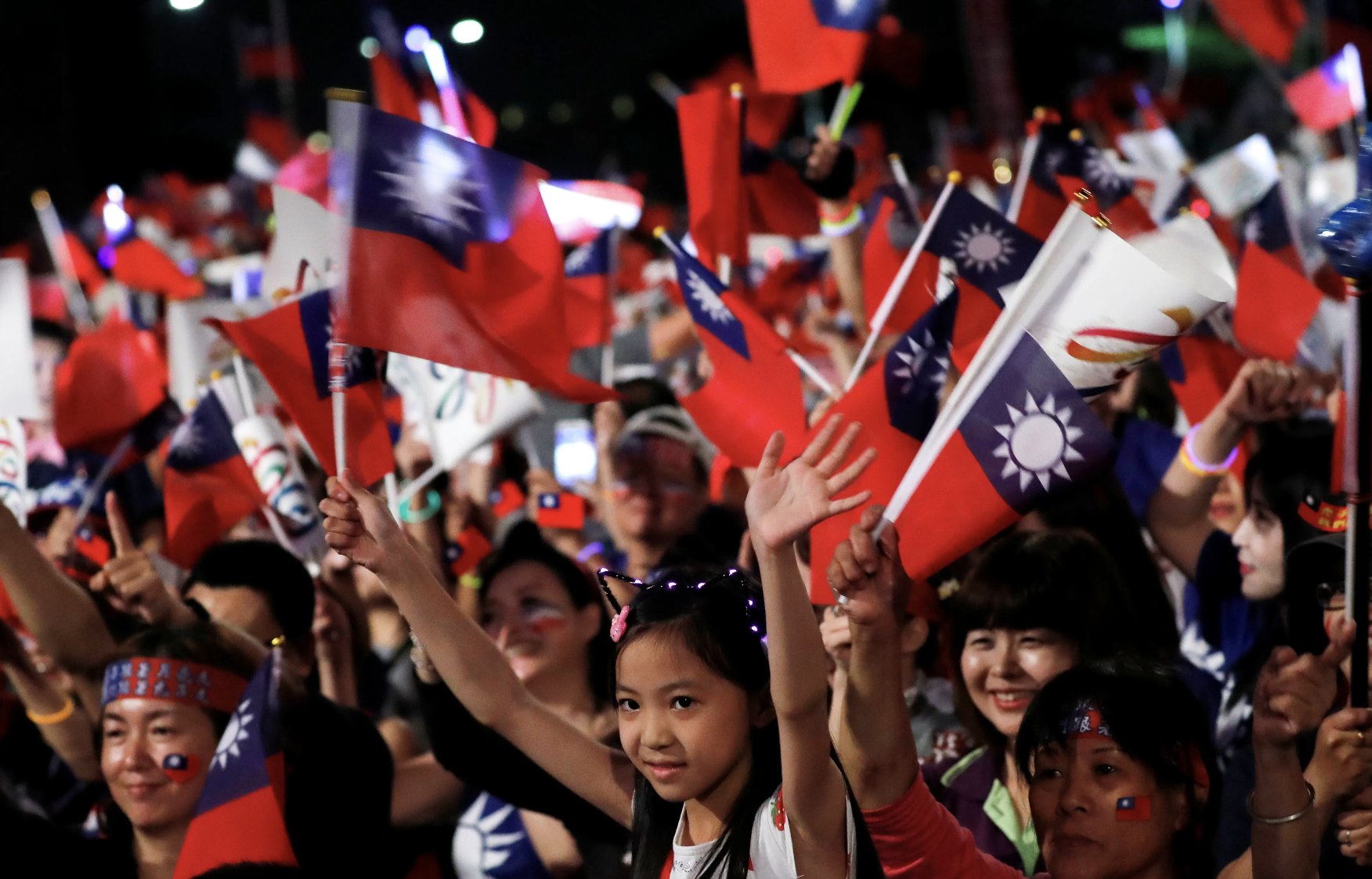
Since lifting the martial law in 1987, Taiwan’s shift towards democratization catalyzed a wave of freedom for Taiwan’s youth; and the ensuing eight democratic elections, that observed three transitions of power, defiantly cement liberal democratic values at the doorsteps of Communist China. Taiwan’s democracy’s significance lies in not only a starkly contrasting Chinese authoritarian rule, but fostering a rise of the “Taiwanese” identity, which challenges China’s claim of Taiwan. For over three decades, National ChengChi University (NCCU)’s survey revealed the proportion of individuals identifying as Taiwanese rose from 17.6% in 1992 to 62.5% in 2025, those as Chinese fell from 25.5% to 2.3%, and those identifying as both decreased from 46.4% to 30.5%. The finding posits a correlation between years since democracy and a rise of Taiwanese identity. Through interviews with students at the Fletcher School, I investigate the “Taiwanese” identity and its possible relation with Taiwan’s democratic system and society.
The findings garnered three results. First, Taiwan and China share the origin of cultures, myths, and even Confucian belief system – hence Taiwanese identity only actualizes in the differing political systems. Riley, a first-year M.A. in Law and Diplomacy (MALD) student from Taiwan, argues “[the] drastic difference [is] that [Taiwan] has a voting system, which corresponds to a democratic system,” and a Chinese citizen “would never truly grasp the nuances of voting in a democracy [because] they received differing education, and hold distinct concepts on politics.” From advertisement boards to religious activities, in Taiwan, politics is present in daily life.
Second, the construct of a Taiwanese identity is time. Ashley, a second-year MALD student from Taiwan, proposes that “as time passes, younger generations in Taiwan see historical ties with China [as] increasingly distant.” In addition, Riley argues a demographic shift to the youth, born in Taiwan rather than older generations who moved from China, forged a stronger unity of Taiwan. For every younger generation born and educated in democratic values, the Taiwanese identity is further established, and farther from being Chinese.
Lastly, Fohua, a second-year MALD student from China, claims that the Taiwanese identity stemmed from the struggle for democracy. Enduring nearly 40 years of martial law under the Chiang family, Fohua argues the recency of the struggle evokes memories of the path towards democracy. Ashely and Riley argue that the youth critiquing the White Terror and tearing down statues of Chiang Kai-Shek is “unsurprising” due to the connection to China, the symbol of dictatorship, and a time lacking democracy. Thus, the collective will of Taiwanese citizens, to combat tyranny, formed the Taiwanese identity.
Being Taiwanese is an identity of democracy and its values, built through the changes over time but embraced by the memories of the struggle. Despite their cultures similarities, differences such as the separation of power, check-and-balance government, impartial, transparent voting has transformed what it means to be Taiwanese. Being Taiwanese is not only the culture, language, ethnicity, or location, it is the acknowledgement and experience of the democratic political system that makes Taiwan unique.

